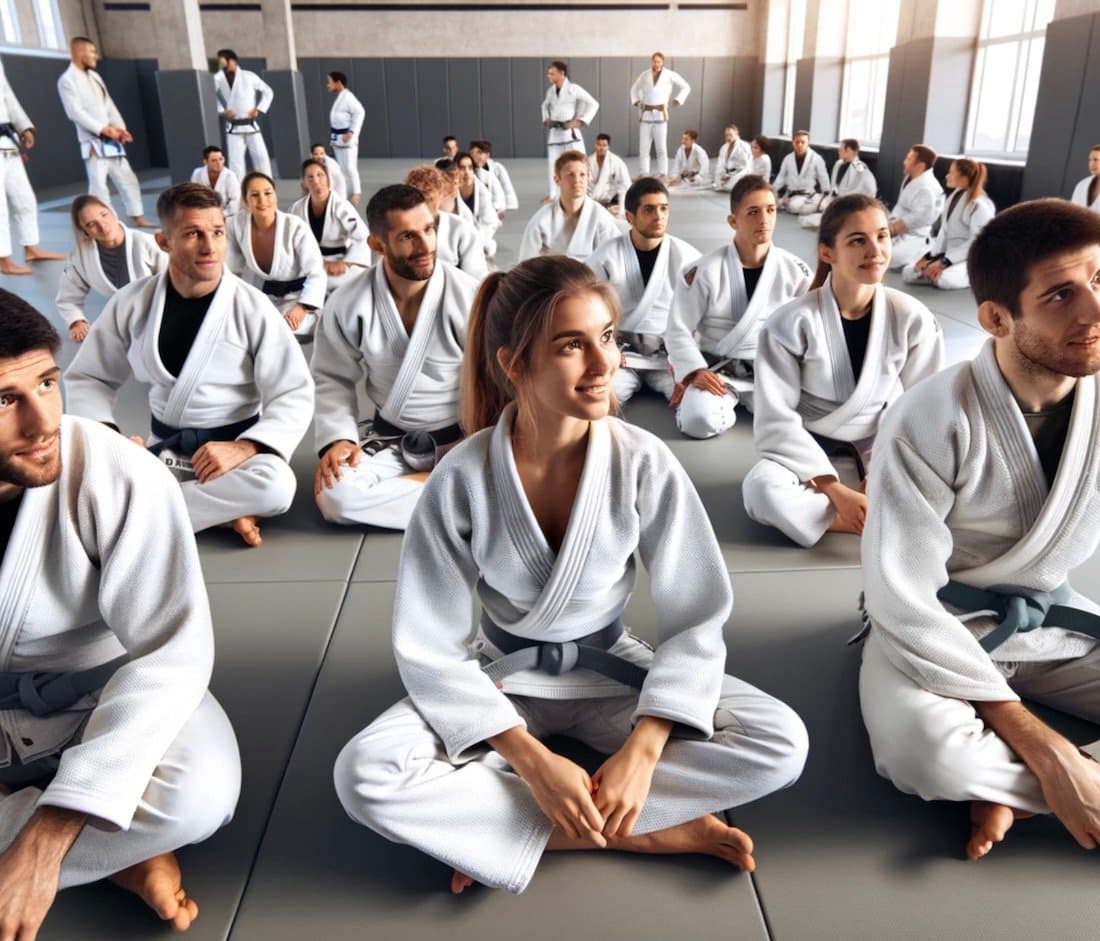
BJJ Black Belts: The Rank, the Journey, and Notable Names
What a BJJ black belt actually means, how to earn one, how long it takes, plus notable black belts in the sport from Roger Gracie to Gordon Ryan.
The black belt is the most recognised symbol of expertise in any martial art, and in Brazilian Jiu-Jitsu it carries a weight few other rank systems can match. A BJJ black belt is genuinely an expert. There are no shortcuts to it. Here is what it represents, how to get one, and who some of the most influential black belts in the sport are.
What a BJJ black belt actually means
Reaching black belt in BJJ means:
- You have trained consistently for around 10 to 12 years. Most people get there with two to four classes a week over more than a decade.
- You have functional mastery of the BJJ system. Not perfection. You can handle most grapplers at most belt levels, in most situations.
- You can teach. Most academies expect black belts to coach lower belts, run fundamentals classes, and represent the gym.
- Your defence is real. A black belt does not panic in bad positions. They have been there, escaped from there, and built systematic answers.
It does not mean you have stopped learning. The technical curve flattens at black, but the coaching and conceptual side of the game accelerates.
How long it takes
The average time is 10 to 12 years of consistent training. The fastest realistic adult timeline starting from scratch is about 8 years. Elite competitors who start as children can reach black belt earlier (Mikey Musumeci received his at 18 after starting at age 4).
The IBJJF sets a minimum age of 19 to receive an adult black belt.
| Belt | Average years to reach |
|---|---|
| Blue | 1.5 to 3 |
| Purple | 4 to 6 |
| Brown | 6 to 9 |
| Black | 10 to 12 |
For the full belt-by-belt expectations, see our jiu-jitsu belts guide.
How a BJJ black belt is awarded
No exam. No certificate. No online module. The decision sits with your professor and is based on:
- Time in grade. You will not get the rank early because you are skilled.
- Technical knowledge. Can you execute the techniques expected of a black belt?
- Rolling performance. Can you genuinely hold your own at the level?
- Attendance. Years of consistent training, not months.
- Conduct. Black belts represent the gym and the sport.
- Teaching ability. Most academies expect black belts to coach. If you cannot teach, you are usually not promoted.
The black belt ceremony itself varies. Some academies have formal promotion events with the whole gym present. Some quietly tie the belt on someone after class. Either way, the moment is unforgettable for the person being promoted.
After black belt: degrees, coral, red
Black belt is not the end of the ranking system. After black come the degrees:
- 1st through 3rd degree: Three-year minimums between each.
- 4th through 6th degree: Five-year minimums.
Beyond 6th degree:
- 7th degree (red and black coral): Awarded after seven years at 6th degree.
- 8th degree (red and white coral): Awarded after seven more years.
- 9th degree (red belt): Grandmaster.
- 10th degree (red belt): Historically reserved for the founding Gracie pioneers.
A 7th-degree coral belt represents around 38 to 42 years of training. There are very few of them in the world.
Notable BJJ black belts
The black belts who have shaped the modern sport. Not a comprehensive list, but the names worth knowing.
The founders
- Hélio Gracie: Co-founder of Gracie Jiu-Jitsu. His refinement of the techniques toward leverage-based grappling created the modern art. Held a 10th-degree red belt.
- Carlos Gracie Sr.: Brought BJJ to Brazil after training under Mitsuyo Maeda. Founder of the Gracie school of jiu-jitsu.
- Rolls Gracie: Considered by many to be the most technically advanced Gracie of his generation before his death at 31.
Competition legends
- Roger Gracie: 10-time IBJJF World Champion, widely considered the most accomplished competitor in the sport's history. Known for his pressure-based gi game, the cross-collar choke from mount, and a clean, system-perfect style.
- Marcelo Garcia: Five-time ADCC World Champion, four-time IBJJF World Champion. One of the most influential modern competitors. Famous for his back-take system and his choke-finishing game.
- Buchecha (Marcus Almeida): 13-time IBJJF World Champion. The most-decorated black belt in IBJJF history at the time of his retirement from gi competition.
- Bernardo Faria: Five-time IBJJF World Champion. Pressure-passing specialist and now one of the most influential instructors on BJJ Fanatics.
- Andre Galvao: Six-time IBJJF World Champion, six-time ADCC Champion. Founder of Atos Jiu-Jitsu. See our full profile on Andre Galvao.
Modern era
- Gordon Ryan: Multiple-time ADCC Absolute Champion and the dominant no-gi grappler of the modern era. See our full profile.
- Mikey Musumeci: Five-time IBJJF World Champion in gi and no-gi, ONE Championship submission grappling king. See our profile.
- Nicholas Meregali: ADCC medallist and IBJJF World Champion in the gi. Now a key member of New Wave Jiu-Jitsu.
- Giancarlo Bodoni: Back-to-back ADCC 88 kg Champion (2022 and 2024). New Wave.
- Kade and Tye Ruotolo: Twin black belts, ADCC champions, popularisers of the buggy choke (see our BJJ moves glossary) and one of the most-watched young black belt rivalries in the sport.
Coaches who shaped the modern game
- John Danaher: 6th-degree black belt under Renzo Gracie. Architect of the leg-lock revolution and the modern no-gi systems used by Gordon Ryan and the rest of New Wave Jiu-Jitsu. See our profile.
- Renzo Gracie: Coach to several generations of elite competitors including the original Danaher Death Squad. Founder of Renzo Gracie Academy in New York.
- Cobrinha (Rubens Charles): Multiple-time IBJJF World Champion turned coach. Trained Mikey Musumeci among many others.
- Fabio Gurgel: Founder of Alliance, one of the deepest competition teams in BJJ history.
British and European black belts
- Roger Gracie (London-based for much of his competitive career).
- Braulio Estima: Multiple-time IBJJF World Champion, ADCC Absolute champion. Based in Birmingham, UK.
- Daniel "Raspberry Ape" Strauss: British black belt under Roger Gracie, founder of Ape Academy. See our Daniel Strauss profile.
How to actually earn a black belt
Most people who reach black belt have a similar profile:
- Consistent attendance. Two to four classes a week for over a decade.
- They drill. Not just rolling. Drilling is what builds the muscle memory that holds up under live resistance.
- They compete or test their game. Even a few competitions or open-mat visits expose gaps.
- They teach. By brown belt at the latest, they are coaching lower belts.
- They tap. A black belt has tapped tens of thousands of times in training. Tapping is information, not failure.
The single biggest predictor of reaching black belt is not talent. It is consistency. Most people who quit do so at blue belt or after a long injury. Those who keep showing up eventually get there.
Frequently asked questions
How long does it take to get a BJJ black belt? On average, 10 to 12 years of consistent training. Elite competitors who start as children can reach it faster. The fastest realistic adult timeline from scratch is around 8 years.
Who has promoted the most BJJ black belts? Coaches like Renzo Gracie, John Danaher, Cobrinha, Fabio Gurgel and Carlos Gracie Jr. have promoted dozens of black belts over their careers.
Can you skip belts in BJJ? Officially, no. The IBJJF requires sequential promotion. In rare cases, an instructor may double-promote a clearly underranked grappler (especially someone returning from another martial art at a high level), but this is the exception.
Who is the youngest BJJ black belt ever? The minimum age for an adult black belt under IBJJF is 19. Mikey Musumeci received his at 18, awarded by Gilbert Burns. Several other elite juvenile competitors have been promoted at similar ages.
Are women's BJJ black belts different? No. The same rank, the same system, the same time-in-grade. There is no separate belt system for women in BJJ.
Do BJJ black belts ever lose to lower belts? Yes, occasionally. A talented blue belt with a wrestling background can give some black belts trouble. The difference is consistency: a black belt will handle the same scenario five times in a row, the lower belt will catch them once.
How do you address a BJJ black belt in class? Most students call their head instructor "Professor" or "Coach". Other black belts are often addressed by name or "Coach". When in doubt, ask the academy's etiquette.
The bottom line
A BJJ black belt is the result of more than a decade of consistent training, drilling, rolling and learning. It does not make you the best grappler in the room (often the room contains higher belts who will tap you). It does not mean you are done learning. It means you have crossed the line from student to teacher, from learning the system to contributing to it.
For the structural breakdown of the whole belt system, see BJJ belt system. For the per-belt practical guide, see jiu-jitsu belts. For the techniques you will work on the whole way through, see our complete BJJ moves glossary.
Last updated May 16, 2026
Filed under All
// Keep going
More from All

New Wave Jiu-Jitsu: The Anatomy of a Modern No-Gi Dynasty
Deep look at New Wave Jiu-Jitsu: John Danaher's coaching system, the core roster (Gordon Ryan, Meregali, Bodoni, Tonon), rising prospects, and the B-Team rivalry.

The BJJ Belt System: Order, Time, and How Promotions Work
The full BJJ belt system explained: order of belts (white to red), time-in-grade expectations, the stripe system, IBJJF rules and how promotions actually work.
If You Train BJJ For A Year, Will You Have Good Self Defence?
Imagine stepping into a Brazilian Jiu-Jitsu (BJJ) dojo for the first time. The smell of the mats, the sounds of bodies hitting the floor, and the sight of