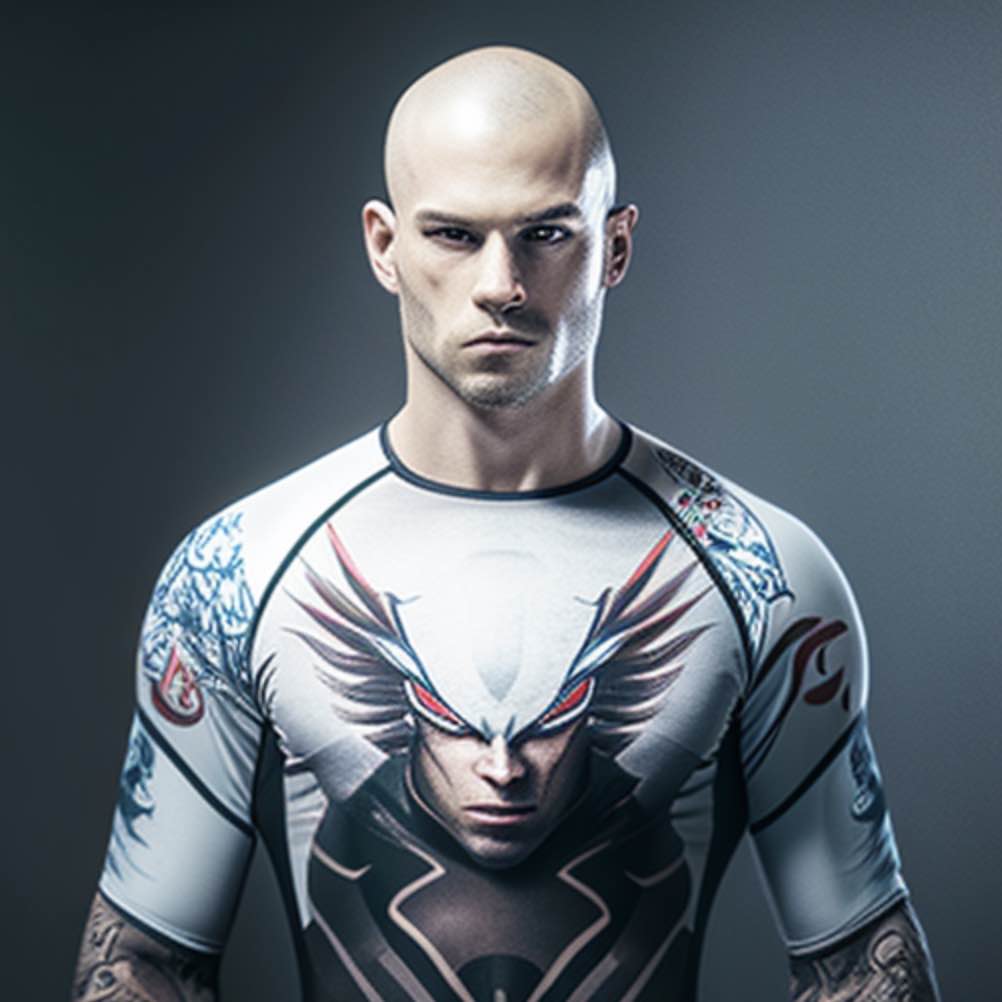
Hayabusa Rashguard Review: Long-Term Use for BJJ
Honest long-term review of the Hayabusa rashguard for BJJ: build quality, fit, durability over a year, washing routine, pros and cons, and who it suits.
The Hayabusa rashguard is one of the most popular premium rashguards in BJJ. I have been training in mine for over a year, gi and no-gi, summer and winter. This is the honest long-term review: where it earns the premium, where it does not, and how it compares to the rest of the market.
Quick verdict
For around $50 to $70, the Hayabusa rashguard sits firmly in the premium tier and earns its price tag. Build quality is well above budget rashguards, the fit holds up after dozens of washes, and the sublimation print survives the gi friction that destroys cheaper alternatives. If you train more than twice a week and want a rashguard that lasts 18 to 24 months, this is one of the safer premium picks.
Specs at a glance
- Material: Polyester-spandex blend (around 80/20)
- Construction: Flat-lock stitching at the seams
- Print: Sublimation (dyed into the fabric, not screen-printed)
- Treatment: Anti-microbial fabric
- Fit: Modern competition cut, true to size
- Sleeve options: Long-sleeve and short-sleeve
- Sizes: XS through XXL
- Price: Around $50 to $70 depending on design
First impressions
Out of the packaging, the Hayabusa feels noticeably denser than budget rashguards. The fabric has a slight weight to it without being thick, and the stitching at the cuffs and waistline looks reinforced rather than just hemmed. The print is sharp and runs deep into the fabric.
The fit is what Hayabusa calls "competition cut" and runs true to size. I am a medium across most BJJ brands and the medium Hayabusa is snug without being restrictive. The sleeves reach the wrist without bunching at the forearm.
Fit and feel on the mats
The compression fit does what it should: it holds shape during rolls, does not ride up when you go horizontal, and does not bunch at the armpits. The four-way stretch is real; you can move freely through any range BJJ asks for without feeling restricted.
The collar is the part I judge most on rashguards. Cheaper rashguards have collars that pop out, distort, or refuse to flatten after a few washes. The Hayabusa collar has held its shape for over a year of weekly washing.
Durability after a year
After roughly 14 months of training (gi and no-gi, two to four sessions a week, washed after every session):
- Stitching: Still intact at every seam. No threading loose, no separation at the cuffs or hem.
- Fabric: Slight pilling on the back where it rubs against gi jackets. Otherwise clean.
- Compression: Still snaps back. The waist hem has not stretched out.
- Print: No fading, no cracking, no peeling. This is the sublimation paying off.
For comparison, my cheaper backup rashguards have started visibly failing in some combination of these areas within six months. The Hayabusa has not.
The washing routine
My standard rashguard care, which has kept the Hayabusa in good shape:
- Wash immediately after every session. Polyester does not forgive sitting damp.
- Cold water, inside out. Hot water destroys spandex.
- Athletic detergent. Designed for synthetic fabrics and sweat.
- No fabric softener. Coats the fabric and reduces moisture wicking.
- Hang dry indoors. Never tumble dry. Heat is what kills rashguards.
If the rashguard starts holding a smell despite washing, a splash of white vinegar in the drum kills most of the responsible bacteria.
Pros
- Premium build quality that justifies the price
- Sublimation print does not crack, peel or fade
- Compression fit holds up after dozens of washes
- Anti-microbial treatment makes a real difference in odour control
- Strong design aesthetic across the range
- Reinforced stitching at the high-stress areas
Cons
- Higher price than budget alternatives (Sanabul Essentials is half the price)
- Runs slightly slim; bigger builds may want to size up
- Not available in IBJJF ranked colours by default (you would need to seek out specific colourways)
- Some designs are loud, which is fine if you like the brand identity but a turn-off if you want plain
Who should buy it
Buy the Hayabusa rashguard if:
- You train two or more times a week and need gear that lasts
- You prefer paying once for a premium piece over replacing budget rashguards yearly
- You like the Hayabusa design aesthetic (clean, athletic, sometimes bold)
- You compete and want a rashguard that looks fresh after long use
Skip it if:
- You need a ranked rashguard for IBJJF no-gi competition (look at Sanabul or Tatami's ranked options instead, see best BJJ rashguards)
- You are testing the waters with BJJ and want the cheapest option that works
- You prefer plain rashguards with no branding
How it compares to the rest of the market
For the full rashguard guide and comparison to other brands, see best BJJ rashguards.
Quick comparison:
- vs Sanabul Essentials: Hayabusa is more durable and looks better; Sanabul is half the price and fine for entry-level use.
- vs Tatami Fightwear: Similar tier. Tatami's range is wider, especially for ranked rashguards. Hayabusa has slightly better art and finish.
- vs Venum: Venum's rashguards are similar price and build. Aesthetic is the main differentiator.
- vs Xmartial customs: Xmartial wins on personalisation. Hayabusa wins on standard fabric quality.
Hayabusa rashguard fit guide
Hayabusa rashguards run true to size, with a slight lean toward slim. The size chart on Amazon is accurate. A few notes:
- If you are between sizes, size up.
- Long-sleeves should reach the wrist, not the mid-forearm.
- The rashguard should reach below your hipbone so it does not ride up.
- If you have a broader chest or shoulders, check the bicep measurement on the size chart specifically.
Frequently asked questions
Is the Hayabusa rashguard worth the price? Yes, if you train regularly. The build quality and durability justify the premium over budget options for anyone training more than twice a week.
How long does the Hayabusa rashguard last? With proper care (cold wash, hang dry, athletic detergent), 18 to 24 months of regular training before significant wear shows.
Is the Hayabusa IBJJF approved for competition? Hayabusa offers competition-legal rashguards in standard colours. Check the specific design before buying if you compete in IBJJF no-gi.
Does it shrink in the wash? Not noticeably if you wash in cold water and hang dry. Hot wash and tumble dry will shrink any polyester-spandex rashguard.
Long-sleeve or short-sleeve? Long-sleeve is the BJJ default. More skin coverage, better mat-burn protection, better for cold gyms. Short-sleeve works for hot climates and summer rotation.
Can I wear the Hayabusa for MMA or no-gi? Yes. The rashguard works equally well in gi training (worn under the jacket) and no-gi training (worn alone with shorts).
How does it compare to a Sanabul rashguard? The Hayabusa is more durable, has better print quality and a better fit. The Sanabul is roughly half the price and is a fine budget option. If you train sporadically, Sanabul is enough. If you train regularly, the Hayabusa is the better long-term spend.
Does the Hayabusa run small? Slightly slim, not small. Order true to size unless you are between sizes, in which case go up.
The bottom line
The Hayabusa rashguard is one of the safer premium picks in BJJ. The build quality, durability and print survival are well above budget alternatives, and the fit holds up to a year-plus of regular training. If you train more than twice a week and want a rashguard you will not have to replace every six months, it is worth the spend.
For other rashguard options across the price range, see our best BJJ rashguards guide. For more on the Hayabusa brand, see our Hayabusa Ultra-Lightweight Pearlweave gi review. For everything else you need to start training, see our BJJ gear guide.
Last updated May 16, 2026
Filed under Gear Reviews
// Keep going
More from Gear Reviews
Top 5 BJJ Gis on Amazon (Honest Picks)
The best BJJ gis you can buy on Amazon: Vector, Elite Sports, Sanabul, Tatami Initial and Venum Contender. Specs, fit, price and who each one is best for.
Hayabusa Ultra-Lightweight Pearlweave Gi Review
Honest long-term review of the Hayabusa Ultra-Lightweight Pearlweave BJJ gi: 350 GSM pearl weave jacket, 8oz ripstop pants, fit, durability, washing routine and verdict.
Essential BJJ Gear: Complete Training and Competition Checklist
Complete BJJ gear checklist: gi, rashguards, mouthguard, finger tape, fight shorts, gym bag and recovery essentials. What to buy at every stage from white belt to competition.