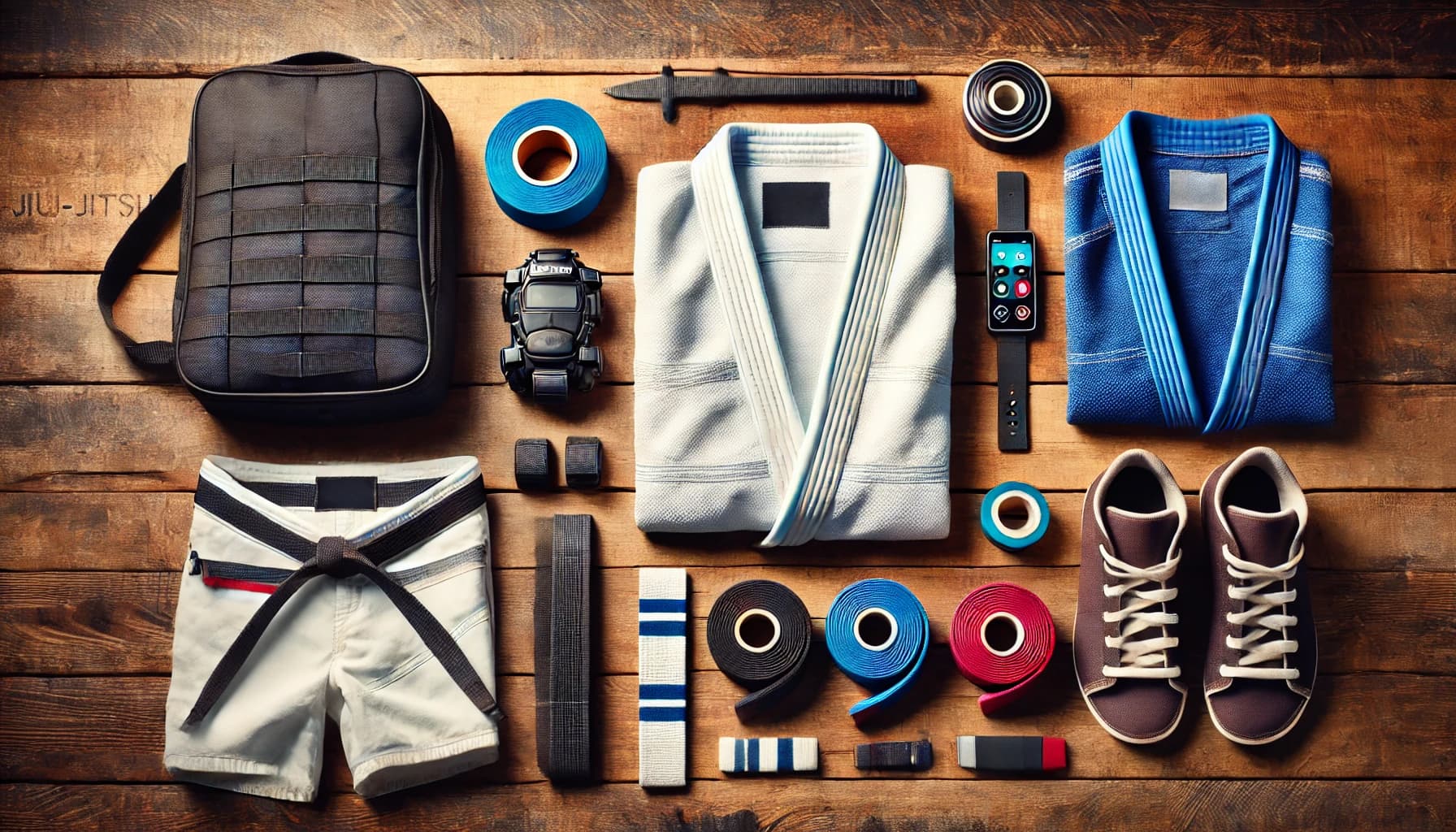
Essential BJJ Gear: Complete Training and Competition Checklist
Complete BJJ gear checklist: gi, rashguards, mouthguard, finger tape, fight shorts, gym bag and recovery essentials. What to buy at every stage from white belt to competition.
A BJJ practitioner's gear bag does not need to be complicated, but the right kit makes a real difference in comfort, performance and how long your equipment lasts. This is the working checklist of essential BJJ gear, from your first class through to competition day, with recommendations for each item.
Quick checklist
The complete BJJ gear list at a glance:
| Item | When to get it | Approx. budget |
|---|---|---|
| BJJ gi | Day one | $60 to $200 |
| Rashguard (long-sleeve) | Day one | $30 to $70 |
| Mouthguard | Day one | $13 to $25 |
| Fight shorts / grappling shorts | Within first month (for no-gi) | $30 to $60 |
| Finger tape | Within first 3 months | $5 to $10 per roll |
| Gym bag | Within first 3 months | $50 to $120 |
| Backup gi | Within first 3 months if training 3+ times a week | $60 to $200 |
| Backup rashguard | Same | $30 to $70 |
| Grappling dummy | Optional, for home practice | $80 to $200 |
| Recovery and nutrition gear | Optional | Varies |
The gi: your most important purchase
Your gi is the most-used piece of BJJ gear and deserves the most thought when buying. Focus on:
- Pre-shrunk fabric. Stops the gi from shrinking unevenly after the first hot wash.
- Pearl weave at 350 to 550 GSM. The modern standard for training and competition.
- Reinforced stitching. Triple stitching at collar, armpits and skirt.
- IBJJF approval. Important if you plan to compete.
Top picks across price tiers:
- Budget: Sanabul Essentials. Pre-shrunk, consistent sizing, under $80.
- Mid-tier: Venum Contender 2.0. IBJJF legal, durable, around $60 to $80.
- Lightweight summer: Hayabusa Ultra-Lightweight Pearlweave. Best for hot climates.
- Premium: Kingz Nano 2.0 100% Cotton.
For the full guide and brand-by-brand breakdown, see our best BJJ gis round-up and our A to Z list of BJJ gi brands. To keep your gi alive, see our gi washing guide.
Rashguard: the second most important piece
A rashguard goes under the gi and is worn alone for no-gi. It protects against mat burn, prevents skin infections, and (for ranked rashguards) signals your belt level in no-gi training.
What to look for:
- Polyester-spandex blend (around 80/20)
- Flat-lock stitching at the seams
- Sublimation print (not screen print)
- Modern competition cut
Top picks:
- Premium: Hayabusa rashguard. Long-lasting, clean print, well-finished.
- Mid-tier: Tatami Fightwear long-sleeve.
- Budget / ranked: Sanabul Essentials ranked rashguard.
For the full guide, see best BJJ rashguards.
Mouthguard: never skip this
Even in pure grappling, a stray knee or elbow can cost you a tooth. A mouthguard is one of the cheapest pieces of insurance you will ever buy.
Top picks:
- Best for grappling: Venum Challenger. Low profile, great breathing channel.
- Best overall: Shock Doctor Gel Max Convertible.
For the full guide and fitting protocol (especially the "do not bite too hard" warning), see best BJJ mouthguards.
Fight shorts and grappling shorts
For no-gi training, you will need a pair of grappling shorts or fight shorts. Avoid generic athletic shorts; the cut, length and lack of pockets all matter for grappling.
What to look for:
- No pockets (or sealed pockets that cannot snag during a roll)
- Flat waistband with internal drawstring
- Cut that allows full range of motion in the hips and knees
- Reinforced stitching at the seams
A solid pick for an entry-level fight short is the Gold BJJ Pacific. See our Gold BJJ Pacific fight shorts review for the long-form take.
Finger tape
BJJ destroys fingers. Finger tape prevents sprains, stabilises existing injuries, and supports your grip on the gi.
What to look for:
- 0.3 to 0.5 inch wide
- Cotton or cotton-synthetic base
- Hypoallergenic adhesive
- Serrated edges for tearing by hand
For the full guide on how to wrap (X-tape, buddy tape, circular wrap) and how to remove without ripping skin, see our BJJ finger tape guide.
Gym bag
A proper BJJ gym bag separates wet and dry kit, has a dedicated compartment for shoes, and survives the abuse of being dragged through gym car parks twice a week.
What to look for:
- Wet/dry separation (or at least a waterproof shoe compartment)
- Big enough for a gi, a rashguard, shorts, mouthguard case, water bottle, and a towel
- Durable construction (the cheap polyester bags fall apart in a year)
- Easy to clean (machine washable or wipeable)
For specific picks, see our BJJ gym bag review.
Backup gi and rashguard
If you train more than twice a week, one gi is not enough. The reasons:
- Drying time. A used gi takes 24 hours to fully dry indoors. Tumble-drying ruins it.
- Smell. Even with perfect washing, a single gi cycled non-stop will hold odour over time.
- Wear. Rotating two or three gis distributes the wear across more material.
Working rotation for different training volumes:
- 2 sessions a week: 2 gis
- 3 to 4 sessions a week: 3 gis
- 5+ sessions a week: 4 to 5 gis
Same rule applies to rashguards. Buy at least two from day one.
Grappling dummy (optional)
A grappling dummy lets you drill movements at home: passing, escapes, leg-lock entries, transitions. It is not essential but is useful for high-volume drillers and competition-track grapplers.
What to look for:
- Weight. 50 to 100 lb depending on what you want to drill.
- Limb articulation. Adjustable arms and legs let you set up specific positions.
- Durable cover. Synthetic leather lasts longer than fabric.
For more, see our BJJ gear guide.
Recovery and nutrition gear
Optional but worth it once you train consistently:
- Foam roller for post-training mobility work.
- Lacrosse ball for trigger-point release in shoulders and feet.
- Compression sleeves or boots for elite-level recovery (overkill for most hobbyists).
- Decent water bottle that survives gym bag abuse.
- Protein powder if you struggle to hit protein targets from whole food.
For the full nutrition guide and protein targets, see BJJ diet and nutrition.
Competition gear
If you compete, you will want additional or upgraded versions of the core kit:
- Competition gi. IBJJF-legal, ideally with no patches that might fail inspection.
- Competition rashguard. Ranked if you compete IBJJF no-gi.
- Competition shorts. Solid colour matching belt rank for IBJJF no-gi.
- Stripped-down gym bag with just the essentials, plus a backup gi in case of weigh-in problems.
- Tape, scissors, towel, snacks, water. Tournament days are long.
A complete competition kit costs more than basic training kit but lasts for years if you take care of it.
What to budget overall
A working starting budget for a BJJ practitioner:
- Absolute minimum (one gi, rashguard, mouthguard): $100 to $150
- Recommended starter (gi, rashguard, mouthguard, shorts, tape): $150 to $250
- Full rotation (3 gis, 2 rashguards, full kit): $400 to $700
- Premium full rotation: $800 to $1500
Most beginners overpay for premium gear before they need it. The honest rule: train for six months in entry-level kit, then upgrade based on what you actually find limiting.
Frequently asked questions
What is the most important piece of BJJ gear? Your gi, followed by a mouthguard. Without a gi you cannot train gi BJJ. Without a mouthguard you risk dental injuries that cost more than a year of gym membership.
Do I need a rashguard for BJJ? Yes. Most academies require one for hygiene under the gi and for no-gi training.
How many BJJ gis should I own? At least two for any consistent training. Three is the sweet spot for 3 to 4 sessions a week. See our best BJJ gis guide for picks across price tiers.
Do I need finger tape from day one? Not from day one, but within the first three months once you start gripping the gi seriously. See our BJJ finger tape guide.
Are grappling dummies worth it? Useful but optional. They help drilling at home but do not replace training partners. Most hobbyists do not need one.
What does a competition BJJ kit look like? A competition-legal gi, ranked rashguard or solid colour rashguard for no-gi, fight shorts, mouthguard, tape, a backup gi, and a streamlined gym bag with snacks and water.
Where should I buy BJJ gear? Amazon is convenient for budget and mid-tier gear. Brand websites (Hayabusa, Tatami, Kingz) for premium options. Local academies often have their own merch and team gear.
Is expensive BJJ gear worth it? For gear you use daily (gi, rashguard, mouthguard), spending a bit more for premium quality usually pays off in longevity. For occasional-use gear (grappling dummy, recovery tools), cheaper is often fine.
How long does BJJ gear last? Gi: 18 to 24 months with regular training and care. Rashguard: 12 to 18 months. Mouthguard: 12 to 18 months. Finger tape: single-use. Gym bag: 3 to 5 years.
Do I need different gear for gi and no-gi? Same gi works for gi class. For no-gi you need a rashguard (which most already wear under the gi) and grappling shorts. Mouthguard, tape and everything else is the same.
The bottom line
A complete BJJ kit is not complicated. Buy a decent gi, a rashguard, a mouthguard, and some finger tape, and you can train for years. Add a second gi when you start training more than twice a week. Add competition kit when you start competing.
The biggest mistake new students make is overspending on premium gear before they know what they need. Start with reliable mid-tier options and upgrade specific items only once you find them limiting.
For specific picks at every price point, see our best BJJ gis, best BJJ rashguards, best BJJ mouthguards, BJJ finger tape, and BJJ gym bag guides. For training and nutrition advice, see our BJJ diet and nutrition and BJJ moves glossary.
Last updated May 16, 2026
Filed under Gear Reviews
// Keep going
More from Gear Reviews
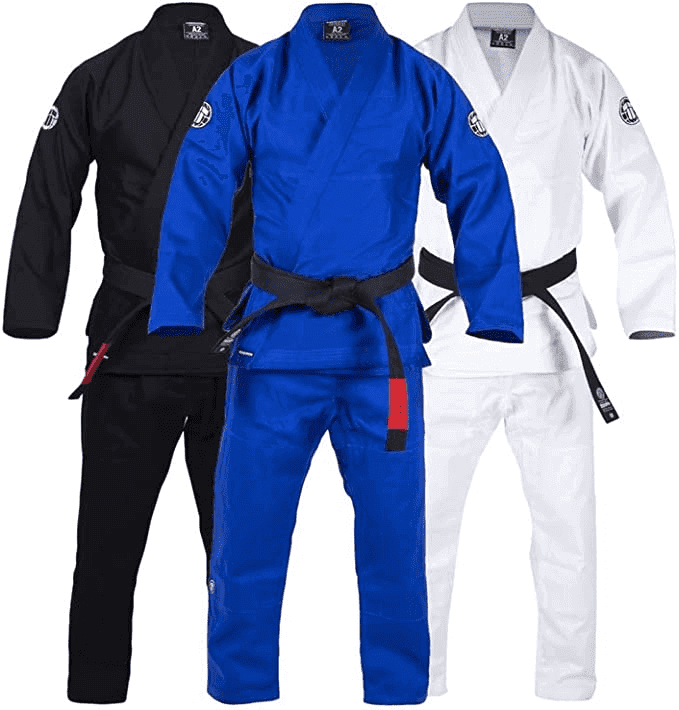
Top 5 BJJ Gis on Amazon (Honest Picks)
The best BJJ gis you can buy on Amazon: Vector, Elite Sports, Sanabul, Tatami Initial and Venum Contender. Specs, fit, price and who each one is best for.

Hayabusa Rashguard Review: Long-Term Use for BJJ
Honest long-term review of the Hayabusa rashguard for BJJ: build quality, fit, durability over a year, washing routine, pros and cons, and who it suits.
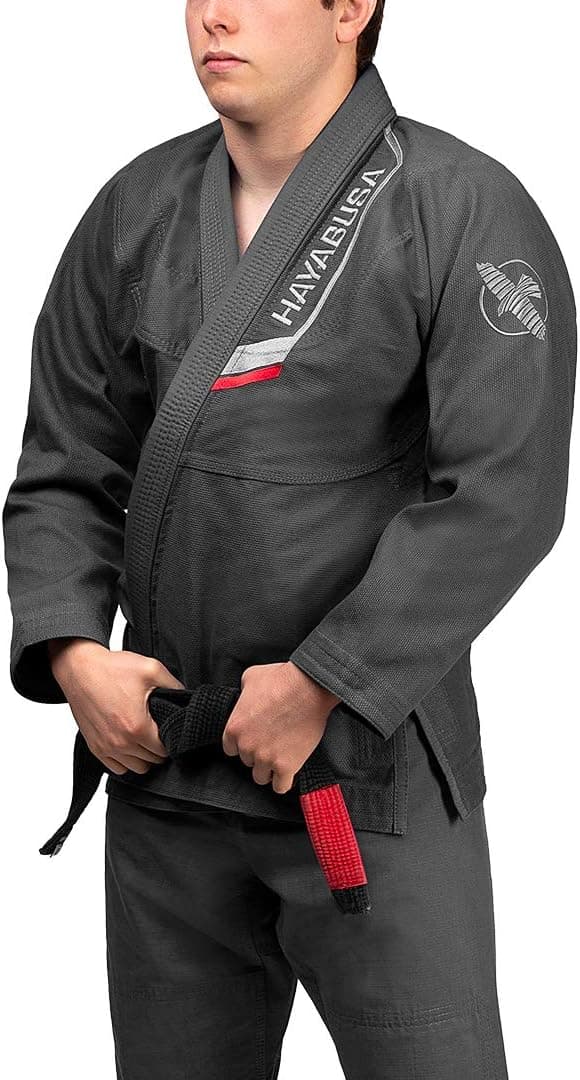
Hayabusa Ultra-Lightweight Pearlweave Gi Review
Honest long-term review of the Hayabusa Ultra-Lightweight Pearlweave BJJ gi: 350 GSM pearl weave jacket, 8oz ripstop pants, fit, durability, washing routine and verdict.