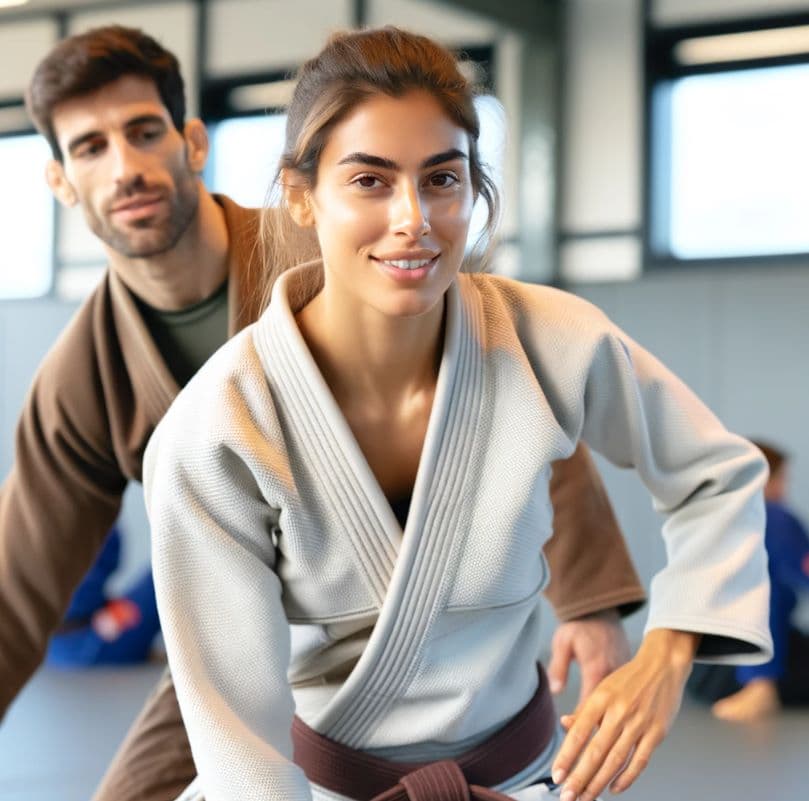
Rolling with Men in BJJ: A Practical Guide for Women
Practical guide for women rolling with male training partners in BJJ: how to approach it, what to expect, when to speak up, and how to use the size difference to your advantage.
In most BJJ academies, women will end up rolling with men. The ratio in a typical class is around 3 to 5 men for every woman, and mixed-gender training is standard. Done well, rolling with male training partners accelerates a woman's BJJ development. Done poorly, it leads to injuries, frustration, and people quitting. This is the practical guide: what to expect, how to approach it, and what to do when something goes wrong.
For the wider context on women in BJJ, see our women in BJJ page.
Why mixed-gender rolling is part of BJJ
BJJ is built around the idea that technique beats size and strength. In practice this means a smaller, lighter, technical practitioner should be able to handle a larger, stronger, less technical one. Mixed-gender rolling tests this idea constantly.
A few facts worth knowing:
- Most women in BJJ roll with men most of the time. There are rarely enough women on the mats for women-only training to be a realistic primary mode.
- The size differential is the point. Training only with people your size produces a narrow grappling game. Training with people significantly bigger and stronger teaches you the leverage-and-technique approach BJJ is built around.
- Most male training partners are respectful. The horror stories that circulate are real but uncommon. Most academies actively maintain a culture where male training partners adjust intensity for smaller training partners.
How to approach rolling with male partners
A working set of guidelines:
Match their intensity, with a floor
Most male training partners will adjust their intensity to roughly match yours, especially when you are newer or smaller. Reciprocate. If they roll lightly, do not turn the heat all the way up trying to prove a point. If they roll harder, hold the intensity at a level that is safe for both of you.
The floor: if at any point the intensity makes you feel unsafe, drop your intensity, slow the pace, or stop. You should never feel forced to match an unsafe level.
Stay technical
The size difference makes muscling techniques even less effective than usual. Focus on:
- Frames that use bone structure rather than muscle to manage distance.
- Leverage rather than strength to apply submissions.
- Hip movement rather than pulling and pushing with your arms.
- Patience in scrambles, since a strength-based scramble usually goes to the stronger player.
Use the bottom game
Most experienced women's BJJ players develop strong guard games specifically because the bottom is where leverage works best against a larger opponent. Closed guard, butterfly, De La Riva, half guard: these positions are all designed to neutralise size and strength. See our BJJ moves glossary for the foundations.
Stay calm under pressure
When a larger training partner gets a dominant position, the instinct is to panic and explode. Resist it. Calm defence, good frames, and patience while waiting for a transition will produce more escapes than frantic struggle.
What you can expect from a good male training partner
The behaviours of a respectful, helpful male training partner:
- Adjusts intensity down, at least until you signal a higher level is fine.
- Lets you work, especially when you are newer. They will not crush every roll.
- Controls their weight, keeping pressure manageable rather than punishing.
- Lets go of submissions early. A tap should release the submission immediately, every time.
- Communicates. They will check in if you have not trained together before, or ask what level of intensity you want.
- Stays technical. They will not grip, twist, or apply pressure aggressively in ways that increase your injury risk.
The vast majority of male training partners in established academies behave this way by default.
What to do if something feels wrong
You will sometimes get paired with someone who does not adjust intensity, who muscles every roll, who holds submissions too long, or whose behaviour feels off in some other way. The protocol:
1. Speak up to the partner
Most issues are not malicious. A direct, calm sentence often fixes it: "Can you ease off the pressure a bit?" or "I'm working on my guard, can we slow it down?" Most male training partners adjust immediately and apologetically when asked.
2. Say no to the next roll
You are not obligated to roll with anyone. If a previous roll felt wrong, decline the next round. "I'm sitting this one out" or "I want to roll with someone else" are complete sentences. You do not need to justify them.
3. Talk to the coach
If a specific partner consistently feels off across multiple rolls, raise it with your head coach. A good coach will address the issue without making it dramatic. This is normal in well-run academies.
4. Leave the academy if needed
If your concerns are not taken seriously, the academy is the wrong one. The BJJ community has enough good academies that you do not need to train at a bad one. Trust your read on the culture.
Practical advantages of rolling with men
Beyond the size-and-strength training, mixed-gender rolling builds:
- A versatile defensive game. Bigger and stronger partners expose every defensive hole. Closing those holes makes you genuinely tough to handle for opponents your own size.
- Mental composure. Calm rolling under pressure transfers directly to competition mentality.
- A realistic self-defence base. Most self-defence scenarios involve larger opponents. Training against them at the gym is the closest thing to live preparation.
- A wider technical repertoire. Different bodies require different techniques. Rolling with a variety of male partners forces you to develop options.
What to watch for in male training partners
A short red-flag list:
- Refuses to roll lightly with newer or smaller training partners. This is a culture sign, not a personal one.
- Holds submissions past the tap. Unacceptable in any academy.
- Makes comments about your body or movement that feel inappropriate. Trust your instinct here.
- Treats every roll as a competition. A hobbyist mat is not a competition floor. Anyone who behaves like it is creates injury risk for everyone, not just women.
- Uses your size as a reason to handle you roughly. The opposite of how BJJ is supposed to work.
Any of these warrants the protocol above: speak up, decline future rolls, raise it with the coach if needed.
Tips from women who have been at it for years
A few collected pieces of advice from female BJJ practitioners who have trained mixed-gender for years:
- Be assertive about intensity. Other people cannot read your mind. State what you want from the roll.
- Drill, then roll. Skills built in slow drilling transfer to fast rolling. The reverse is harder.
- Find a coach who values your development. Not all academies actively coach women. The ones that do produce better female practitioners.
- Compete in women's brackets. Women's brackets are deeper than they have ever been and are the right testing ground for women's-specific competition skills.
- Get strong off the mats. Strength training closes part of the gap with male training partners. See our BJJ diet and nutrition for the broader strength-and-recovery picture.
Frequently asked questions
Is it common for women to roll with men in BJJ? Yes. In most academies, mixed-gender rolling is the default. There are rarely enough women in any single academy to make women-only rolling a primary training mode.
How should women approach rolling with men? Stay technical, use leverage rather than strength, match the partner's intensity within a safe range, and speak up if something feels wrong.
Can I refuse to roll with someone? Yes, always. You never owe anyone a roll. "I'm sitting this one out" is enough explanation.
What should I do if a male partner rolls too hard? Tell them. Most adjust immediately. If they do not, refuse to roll with them again and tell your coach.
How do I roll with someone bigger and stronger? Focus on frames, leverage, hip movement, and the bottom game. BJJ is specifically designed to give the smaller, weaker player tools to handle this matchup. Patience in scrambles, not strength.
Should men go easy on women in BJJ? Men should adjust intensity to match the training partner, regardless of gender. With a smaller or newer training partner of either gender, intensity should come down. With an experienced training partner who wants a hard roll, intensity can come up.
Is mixed-gender rolling safe? With good technique, good academy culture, and mutual respect, yes. Injury rates are not significantly different from same-gender rolling in well-run academies.
Should I look for a women-only academy? Optional. Women-only training has its place, especially for absolute beginners and for specific competition prep. Mixed-gender training is essential for long-term development.
How can I tell if an academy is good for women? Look at how many women are already training there, ask the head coach about their approach, and try a class before committing. If something feels off in the trial class, trust that read.
Do I need different gear if I roll with men? No, the gear is the same. Women's-cut gis are available from most brands, but unisex cuts also work. See our BJJ gear guide and best BJJ gis for picks.
The bottom line
Rolling with men is part of BJJ for most women, and done well it is one of the most effective training environments in the sport. Stay technical, match intensity sensibly, speak up when something is wrong, and trust that most male training partners will be respectful and helpful.
For more on women's BJJ, see our women in BJJ page, our Danielle Kelly profile, and the top BJJ athletes round-up. For the technical foundation that lets size matter less, see our BJJ moves glossary.
Last updated May 17, 2026
Filed under Techniques
// Keep going
More from Techniques
Is Wrestling Taking Over Jiu-Jitsu? Why Every Grappler Now Has To Learn To Wrestle
Guard pulling is dying at the top level and wrestlers are running the no-gi scene. Everyone in my gym is suddenly drilling double legs. Here is my honest take on whether wrestling is taking over jiu-jitsu, and what it actually means for the rest of us who started on our backs.
Are Heel Hooks Ruining Jiu-Jitsu? My Honest Take On The Leg Lock Takeover
Leg locks went from dirty trick to the most important skill set in grappling in about a decade. Heel hooks now decide title matches and blow out knees in equal measure. Here is what the leg lock takeover actually did to the sport, and where I land on whether it ruined anything.
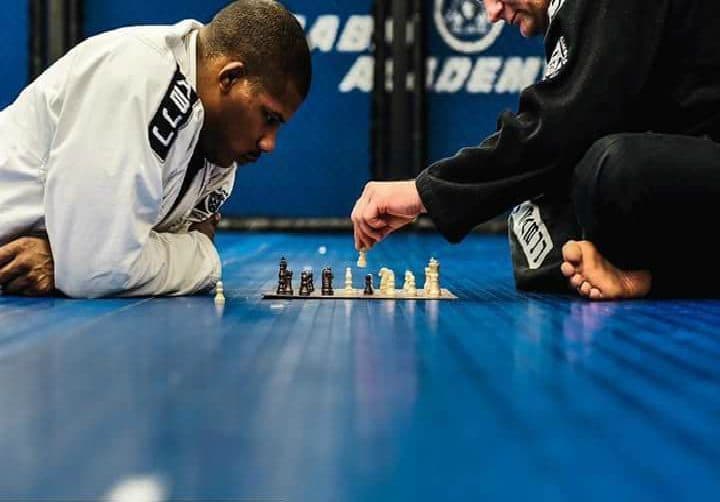
BJJ Mental and Physical Conditioning: Building the Complete Grappler
BJJ strength and conditioning is only half the job. The mental side — focus, composure, pattern recognition under pressure — is what separates grapplers who plateau from those who keep climbing.