Are Heel Hooks Ruining Jiu-Jitsu? My Honest Take On The Leg Lock Takeover
Leg locks went from dirty trick to the most important skill set in grappling in about a decade. Heel hooks now decide title matches and blow out knees in equal measure. Here is what the leg lock takeover actually did to the sport, and where I land on whether it ruined anything.
Walk into any serious no-gi room in 2026 and count how many rounds end with someone reaching for a foot. If you trained ten years ago that number would have been close to zero. Today it is most of them. The leg lock takeover is complete, the heel hook is the most feared submission in the sport, and somewhere a 1995 black belt is shaking his head at all of it.
I have heard the same argument in every gym I have ever rolled in. Heel hooks are too dangerous. Leg lockers are lazy. The whole thing is ruining jiu-jitsu. I used to half believe it. I do not anymore, and I want to walk through why, because the honest version of this debate is more interesting than the gym-lawyer version.
How leg locks went from dirty trick to title decider
For most of the history of Brazilian jiu-jitsu, leg locks were treated like a cheat code you were not allowed to use. The straight ankle lock was tolerated. Everything below the knee that involved rotation was treated as either illegal, dishonourable, or both. Heel hooks in particular were the move your coach told you only cowards threw, usually right before telling you a story about someone who got their knee destroyed by one.
Then the systemisation happened. A small group of people, most famously the John Danaher led group that became the Danaher Death Squad and later New Wave, did to leg entanglements what the Gracies had done to the guard decades earlier. They built an actual system. Positions before submissions. Control first, then the finish. The ashi garami family, the saddle (also called the 411 or honey hole), the outside ashi, the back side fifty. Names for everything, a logic connecting all of it, and a clear hierarchy of control that turned the heel hook from a desperate grab into the end of a controlled sequence.
Once Gordon Ryan and his teammates started heel hooking the best grapplers on earth in the biggest matches, the argument was over. You cannot call a technique a cheat code when it is winning ADCC gold against people who have spent their whole lives avoiding it. The leg lock stopped being a trick. It became a skill set you either developed or lost to.
Why the heel hook scares everyone
The reason this submission generates more fear than any other is simple mechanics. Most submissions give you a clear warning. An armbar stretches the elbow and you feel it coming. A choke cuts the air or the blood and you have a few seconds to decide. The pain arrives, then the damage, and the gap between the two is your window to tap.
The heel hook removes that window. It does not attack the ankle, it attacks the knee through rotation, and the ligaments inside the knee do not have good pain sensors. By the time you feel real pain, the structure protecting the knee can already be gone. People describe hearing a pop before they feel anything. That is the whole problem in one sentence. The submission that does the most quiet damage is also the one that gives you the least notice.
That is why knee reaping was banned for so long, and why the old guard treated the heel hook as uniquely dishonourable. It is not that it hurts more. It is that it hurts later.
The case that heel hooks are ruining the sport
Let me make the argument against as strongly as I can, because there is a real version of it and a lazy version, and most people only ever hear the lazy one.
The strong case is about injury rate. Knees are not elbows. A blown out knee can be a year of rehab, surgery, and a different athlete on the other side of it. If the dominant submission in the sport is also the one most likely to end a training partner's season from a single missed tap, that is a real cost, and it is paid by hobbyists more than pros. The pros know exactly when to tap. The Tuesday night blue belt who just learned what an inside heel hook is does not.
The second part of the strong case is about training culture. Heel hooks reward fast, explosive finishing in a position where your partner cannot always feel the danger. That is a bad combination with ego. A room that does not have clear rules and a mature tapping culture will rack up knee injuries fast once leg locks enter the curriculum.
The lazy version of the argument is just nostalgia. It is the people who never learned to defend their legs calling the thing that beats them dishonourable. That version I have no time for. If your guard gets passed you do not get to call passing dishonourable, and the same logic applies to your feet.
Where I actually land
Here is my honest take after years of getting my legs attacked and learning to attack back.
Heel hooks did not ruin jiu-jitsu. They exposed a hole in it. For decades the entire sport agreed to pretend the legs were off limits, which meant an entire half of the body was a blind spot. The leg lock era did not make the sport more dangerous in some abstract sense. It revealed that a huge number of black belts had no idea how to defend a position that had always been there. That is not the heel hook's fault. That is a thirty year coaching blind spot getting cashed in all at once.
The injury problem is real, but it is a training problem, not a technique problem. The heel hook is not more inherently evil than a fast armbar from a stranger who does not respect the tap. The difference is the margin for error, and you manage margin for error with rules, not bans. Rooms that introduced leg locks with structure, slow rolling, a hard no-jerk policy, and an early-tap culture did not see their members' knees explode. Rooms that let white belts crank inside heel hooks at full speed in open mat did. The variable was never the move. It was the culture around it.
So no, the sport is not ruined. It is more complete than it has ever been. A modern grappler who can attack and defend legs at the same level as the upper body is a more dangerous and more well-rounded athlete than the 2010 version who treated everything below the waist as someone else's problem.
How to actually learn leg locks without wrecking people
If you train no-gi in 2026, you are going to deal with this whether you like it or not. Pretending leg locks do not exist is no longer a defensive strategy, it is just a slower way to tap. Here is the approach I think actually works.
Learn defence first. Before you ever finish a heel hook, learn to recognise when your foot is exposed, how to clear your knee line, and how to hide your heel. Most leg lock injuries happen to people who do not understand the position well enough to know they are already in danger. Defensive literacy is the safety equipment.
Tap early and tap often. There is no tough-guy credit for surviving a heel hook a half second longer. The half second is the injury. Tap to the control, not to the pain, because with this submission the pain is the report that arrives after the damage is done. This is the single most important habit and it pairs with the tapping discipline I covered in the rolling tips guide.
Finish slow in training. The whole point of the heel hook is that it does not telegraph. So in the room you apply it slowly, you never jerk, and you give your partner the chance to tap to position. Save the speed for competition where your opponent has signed up for the risk and knows how to manage it.
Respect the belt rules. The IBJJF and most belt systems restrict heel hooks and reaping at lower ranks for a reason, and even though I think the gi rule set has been slow to catch up, the underlying caution is sound. Leg locks demand a level of body awareness that takes time to build. Earning the position before you earn the submission is not gatekeeping, it is just sequencing.
What the takeover changed about everyone's game
The deeper effect of the leg lock era is not the submissions themselves, it is what they did to the rest of the meta. Once everyone had to respect the legs, guard passing changed. Passers had to learn to clear the legs safely, which is a big part of why body lock and pressure passing took over, something I dug into in the state of BJJ in 2026 piece. Backsteps got more dangerous. The whole geometry of scrambles shifted because any exposed foot was now a finishing opportunity.
It also created specialists. People like Mikey Musumeci built entire world-beating careers around leg lock systems that did not exist as serious competition tools twenty years ago. The leg lock did not just add a few moves to the sport. It opened a whole new lane for athletes to specialise into, and that lane now has its own legends, its own rivalries, and its own evolving theory.
You can see the same dynamic at the top of the pro scene. The big-money events, from ADCC to the CJI prize pools, run rule sets that reward finishers, and a finisher in 2026 without a credible leg game is bringing half a toolbox. The takeover is not slowing down. It is the baseline now.
The bottom line
Heel hooks are not ruining jiu-jitsu. They held up a mirror to a sport that had ignored half the body for decades, and a lot of people did not like what they saw. The submission is dangerous, the injury risk is real, and none of that adds up to ruin. It adds up to a sport that finally takes the legs as seriously as it takes the neck and the arm.
The leg lock takeover made the art harder, more complete, and more honest about what a real fight on the ground looks like. If that feels like ruin, the issue is probably with how your room handles it, not with the move. Fix the culture, learn to defend, tap early, and the most feared submission in grappling becomes just another part of the game you are supposed to know.
If you want the full picture of where the rest of the sport is heading, the state of BJJ in 2026 field report is the companion read. And if you are still learning the names for all of this, the complete BJJ moves glossary will get you fluent before your next open mat.
Now go expose your own blind spots before someone in your gym exposes them for you.
Filed under Techniques
// Keep going
More from Techniques
Is Wrestling Taking Over Jiu-Jitsu? Why Every Grappler Now Has To Learn To Wrestle
Guard pulling is dying at the top level and wrestlers are running the no-gi scene. Everyone in my gym is suddenly drilling double legs. Here is my honest take on whether wrestling is taking over jiu-jitsu, and what it actually means for the rest of us who started on our backs.
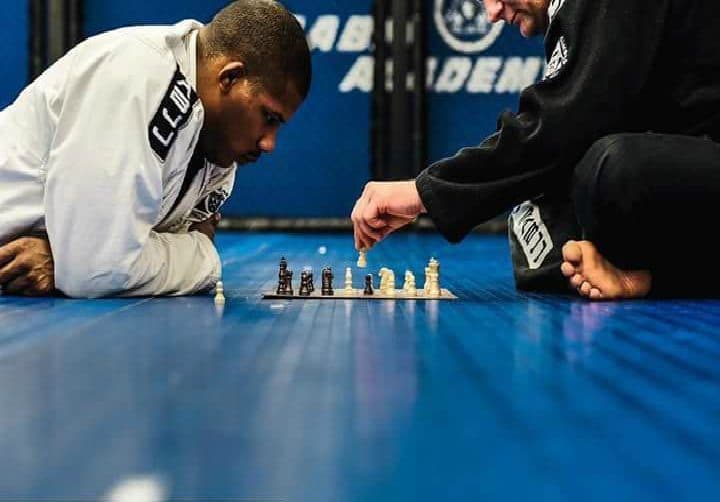
BJJ Mental and Physical Conditioning: Building the Complete Grappler
BJJ strength and conditioning is only half the job. The mental side — focus, composure, pattern recognition under pressure — is what separates grapplers who plateau from those who keep climbing.
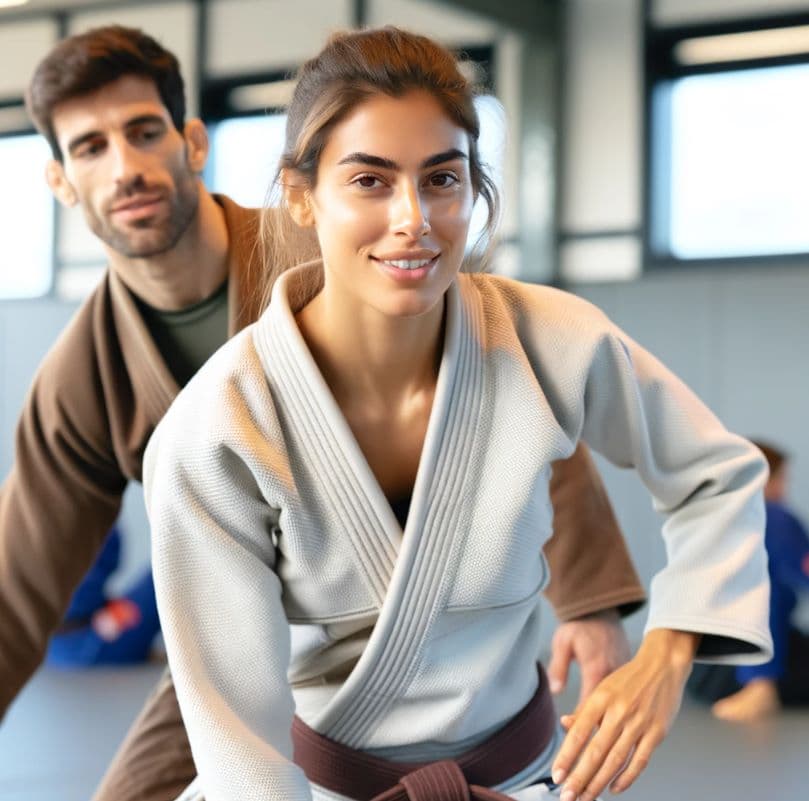
Rolling with Men in BJJ: A Practical Guide for Women
Practical guide for women rolling with male training partners in BJJ: how to approach it, what to expect, when to speak up, and how to use the size difference to your advantage.