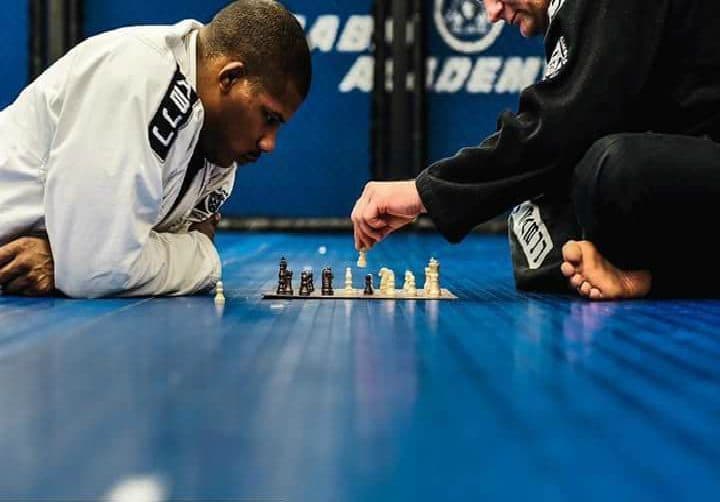
BJJ Mental and Physical Conditioning: Building the Complete Grappler
BJJ strength and conditioning is only half the job. The mental side — focus, composure, pattern recognition under pressure — is what separates grapplers who plateau from those who keep climbing.
Most people walk into a BJJ gym thinking the sport is a physical fight. A few months in, they realise it is a chess match where the pieces can choke you. By blue belt, the smart ones figure out the real ceiling on their game is not their cardio or their grips. It is the six inches between their ears. BJJ rewards the grappler with the best mental and physical conditioning, in that order, and most people train the wrong one harder.
This is the working guide: the physical work that holds up under a brutal training schedule, and the mental work that keeps you sharp when you are gassed, frustrated, and one bad scramble away from a tap.
Why mental conditioning matters in BJJ
Every roll is a problem-solving exercise under load. You have to read grips, anticipate weight shifts, recall what worked last time you were in this position, suppress the panic when someone gets an underhook, and pick the right escape from a list of five — all while your heart rate is at 170 and your forearms are on fire.
If your mind goes blank under that load, none of your technique matters. You will default to flailing. The grapplers who keep climbing past blue belt are the ones whose minds stay calm and pattern-matching while their bodies are wrecked.
The good news: mental conditioning is trainable in exactly the same way physical conditioning is. Stress exposure, recovery, repetition.
The four mental skills BJJ actually tests
- Pattern recognition under fatigue. You have seen this position before. Can you recall the answer when you are gassed?
- Composure when losing. Most submissions catch panicked grapplers, not technically inferior ones.
- Focus and short-term memory. Tracking grips, frames, hooks, escapes — across a five-minute roll without losing the thread.
- Decision speed. Two good options is worse than one good option chosen now.
Working memory and pattern recognition can be trained off the mats too. Anything that forces you to track sequences, hold visual information under time pressure, and recover from a miss without tilting — that is the same machinery you use during a scramble. Even a simple color matching game hits the same loop: hold a pattern, recall under pressure, reset without frustration when you fail. Five minutes a day on something like that does more for your mat composure than another round of mindless drilling.
Physical conditioning: the foundation
You cannot think clearly when you are gassed. Cardio is the floor that everything else stands on. Without it, your mental game collapses around the three-minute mark and your technique unravels with it.
The cardio specific to BJJ
BJJ is not a road run. It is repeated 30-to-90-second bursts of maximum effort with short, incomplete recoveries. The right energy systems to train are:
- Aerobic base. The engine that lets you recover between bursts. Steady-state work — zone 2 cycling, rowing, running — 30 to 45 minutes, two to three times a week.
- Anaerobic capacity. The burst itself. Short, hard intervals: 30 seconds on, 30 seconds off, eight to ten rounds. Once a week is enough.
- Sport-specific cardio. Hard live rolling. Nothing replaces this. Three to five rounds of 5-minute live rolling builds the exact engine BJJ asks for, in the exact muscles, at the exact tempo.
If you can only do one of these, do the live rolling. The other two extend your ceiling.
Strength: enough to not be a liability
You do not need to be a powerlifter. You need to be strong enough that lighter, more technical grapplers cannot just shove you around with their hips. A working baseline:
- Trap-bar deadlift, squat, or hex squat. Once a week, 3 to 5 sets of 5. Builds the posterior chain that drives every guard pass, sweep and stand-up.
- Pull-ups and rows. Twice a week. Pulling strength is the foundation of grip and frame work.
- Overhead press or push-up variation. Once a week. Keeps your shoulders healthy enough to survive the grip wars.
Two strength sessions per week, 30 to 45 minutes each. That is the minimum effective dose for an active grappler. More than that and recovery becomes the bottleneck.
Grip endurance
The grip is where most beginners lose rolls before they lose positions. Gi grips in particular are a separate engine. Hang from a pull-up bar with a folded towel for 20 to 30 seconds at a time, 3 to 5 sets, twice a week. Add a gi if you have one to spare. This is small, boring work that pays off massively. See our deeper guide on BJJ finger and grip care if your hands are already taking damage.
Mobility
Hip mobility is the single biggest unlock for a smoother game. Tight hips mean a stuck guard, a slow shrimp, and a triangle you cannot finish. Five to ten minutes of dedicated hip work — 90/90s, cossack squats, deep squat holds — three times a week, ideally before training.
Mental conditioning: the part nobody trains
Most grapplers train physical conditioning because it is visible. You can measure your deadlift. You can time your run. Mental conditioning is invisible until it breaks, and by then you have already tapped.
Breath control
The first place panic shows up is in your breathing. Under bottom side control, the temptation is to hold your breath and bridge harder. The right move is to slow your breathing down — long exhales, nose breathing if you can — even when your body is screaming for air. This is a skill. Train it deliberately:
- Box breathing between rounds. 4 seconds in, 4 hold, 4 out, 4 hold. Two minutes between rolls.
- Nasal breathing during light rolling. Force yourself to keep your mouth closed when rolling with someone you can manage. You will gas faster at first, then your aerobic system will adapt.
Composure under bad positions
The grapplers who escape mount, side control and back-take are not the ones with the best technique. They are the ones who do not panic. Composure is built by being put in bad positions on purpose — over and over — until they stop feeling like emergencies.
A simple drill: start every other round from bottom side control or in a half-finished submission. Survive first. Escape second. Win never. After a few months of this, the positions stop triggering the fight-or-flight reflex, and your technique actually has a chance to come out.
Pattern recognition
Pattern recognition is the silent engine of upper-belt BJJ. Black belts do not think faster than blue belts. They have just seen the position before and know what comes next. You can accelerate the process by:
- Reviewing your own rolls. Film one round per session. Watch it the next day. You will see three things you did not feel.
- Studying positionally, not move-by-move. Pick one position (closed guard, half guard, side control bottom) and study every variation for a month. Cross-reference our BJJ moves glossary when names blur together.
- Mental rehearsal. Five minutes before sleep, run a sequence in your head. Specific grips, specific reactions, specific finishes. Visualisation is not a cliché — it is rehearsal without the recovery cost.
Handling the tap
This is the one nobody talks about. Tapping is part of training. Grapplers who treat every tap as a failure burn out, hold grudges against partners, or get hurt because they refused to tap to a deep submission. The correct frame: a tap is a data point. You found a hole in your game. Now you know where the work is.
If you struggle with this, ask yourself after a tough roll: "What did I learn?" — not "Did I win?" The first question keeps you climbing. The second one keeps you stuck.
How to actually combine the two
The standard mistake is treating mental and physical conditioning as two separate practices. They are the same practice. Every hard roll is mental conditioning. Every stressful scramble is breath control. Every bad position you survive is a deposit in your composure bank.
A working weekly template for a serious recreational grappler:
- 3 to 5 mat sessions. At least two with hard live rolling. One should include positional rounds from bad positions on purpose.
- 2 strength sessions. 30 to 45 minutes. Compound lifts, moderate volume.
- 1 dedicated cardio session. Intervals or a long zone-2 effort.
- Daily breath work. 5 minutes. Box breathing or nasal breathing during a walk.
- 2 to 3 film sessions per week. Watch your own rolls or study one position.
You do not need to do all of this perfectly. You need to do most of it consistently for a long time. The grapplers who get good are not the ones with the best programme. They are the ones who show up on the days they do not want to, train the position they hate, and stay calm in the spots that used to make them panic.
For more on the foundations of the technical game these conditioning systems support, see our BJJ rolling tips guide and the nutrition guide that fuels the whole stack.
The bottom line
Physical conditioning gets you through the first three minutes. Mental conditioning gets you through everything after. Train both, separately and together, and the gap between you and the version of you who walked in last year will be wider than you expect.
Most of the work is unglamorous. Breath drills. Position survival. Boring zone-2 cardio. Filmed rolls you do not want to watch. Nobody is going to congratulate you for it. But six months in, your training partners will start asking you what changed.
Filed under Techniques
// Keep going
More from Techniques
Is Wrestling Taking Over Jiu-Jitsu? Why Every Grappler Now Has To Learn To Wrestle
Guard pulling is dying at the top level and wrestlers are running the no-gi scene. Everyone in my gym is suddenly drilling double legs. Here is my honest take on whether wrestling is taking over jiu-jitsu, and what it actually means for the rest of us who started on our backs.

Are Heel Hooks Ruining Jiu-Jitsu? My Honest Take On The Leg Lock Takeover
Leg locks went from dirty trick to the most important skill set in grappling in about a decade. Heel hooks now decide title matches and blow out knees in equal measure. Here is what the leg lock takeover actually did to the sport, and where I land on whether it ruined anything.
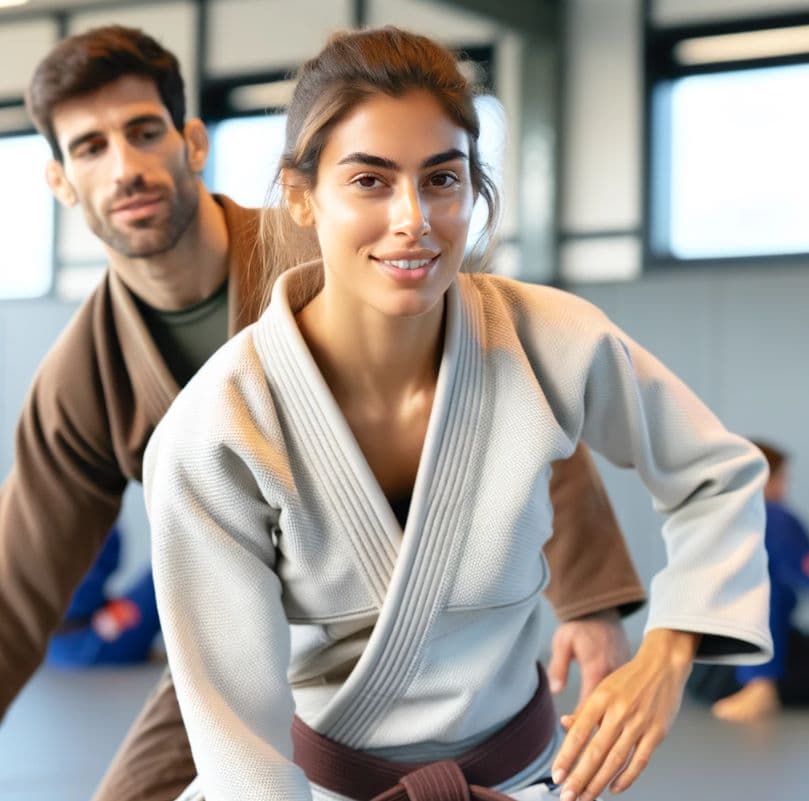
Rolling with Men in BJJ: A Practical Guide for Women
Practical guide for women rolling with male training partners in BJJ: how to approach it, what to expect, when to speak up, and how to use the size difference to your advantage.