20 BJJ Rolling Tips for Gi and No-Gi (Beginner to Intermediate)
20 practical BJJ rolling tips for gi and no-gi: grip control, scrambles, defending submissions, winning sweeps and the small habits that separate upper belts.
The gap between a competent blue belt and a stuck blue belt is rarely a missing technique. It is twenty small habits that the better grappler has and the stuck one has not yet built. The list below is the working version: the tips that show up in nearly every roll, that upper belts apply automatically, and that you can train into your game starting tomorrow.
For the technical foundation behind these tips, see our BJJ moves glossary.
Top game tips
1. Toe engagement in side control
Keep your toes engaged on the mat while in side control. This lets you drive your weight into your opponent, makes their hip escape harder, and stops them from getting under you. Toes flat on the mat means you are pinning. Toes off the mat means you are floating, and they will recover guard.
2. Crossface and underhook at all times
The two non-negotiable control points in side control. Crossface to prevent them from turning toward you. Underhook on the far side to prevent them from turning away. Without both, your side control is a holding pattern. With both, it is a launching pad.
3. Hips higher than theirs in scrambles
The higher hips win the scramble. Drop your hips and they go to the top. Lift yours and you do. In any scramble situation, ask yourself which set of hips is higher, and adjust.
4. Break their posture in your guard
Almost every attack from closed or open guard starts with broken posture. If they have strong upright posture, you cannot triangle, armbar, or sweep effectively. Pull them down with collar grips, frame on their biceps, or break their base before going for the finish.
5. Path of least resistance
Stop forcing the technique you started. If they defend the armbar, take the triangle. If they defend the triangle, take the omoplata. The best grapplers chain attacks through whichever opening their opponent gives them, not through whichever attack they preferred initially.
Bottom game and guard tips
6. Sit-up guard, not lying-down guard
Lying flat on your back in guard is a passive position. Sit on your butt with your shoulders up, ready to grip the collar and sleeves as your opponent approaches. The sit-up version of guard is closer to a fighting stance than a recovery stance.
7. Trap their arms to create finishes
Almost every submission starts with isolating an arm. Trap their hands against your body, against the mat, or under your foot. A trapped arm is a finished arm waiting for the right setup.
8. Underhooks beat overhooks
When in doubt, fight for the underhook. Underhooks let you elevate, take the back, set up sweeps, and prevent your opponent from controlling your head. Overhooks have their uses, but underhooks are usually the better choice.
9. Load their hips onto yours
Get your opponent's weight onto your hips, not your chest. Once their weight is on your hips, you control where they go: you can sweep, off-balance, or transition. Once their weight is on your chest, you are getting passed.
10. Wedges with your feet
Your feet are not just for hooking. They are wedges. Use them to pry out stuck limbs, break grips, and create space when your hands are tied up. The foot-as-wedge concept is one of the most underused fundamentals in BJJ.
Grip and control tips
11. Grips matter more than you think
Grip-fighting is half the game. Whoever wins the grip exchange usually wins the position. Strong grips create attacks; weak grips concede them. See our BJJ finger tape and Daniel Strauss grip training pages for ways to build grip strength.
12. Break the grips that block you
If a grip is preventing the technique you want, break it before continuing. Stripping grips is a learnable skill: pinch their thumb, peel the grip off with both hands, or move your body off the grip.
13. Hands off the mat
Your hands on the mat are unavailable hands. They are also exposed for arm attacks. Keep your hands in front of you, near your training partner, ready to grip or frame.
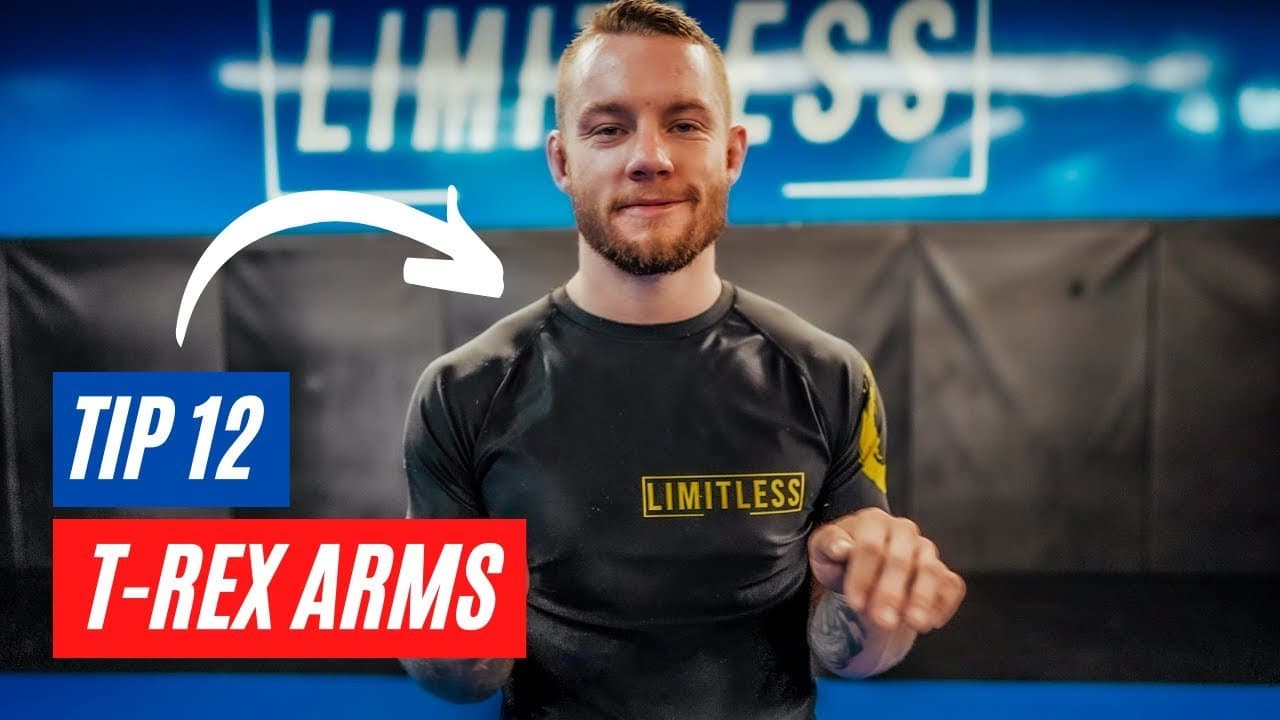
14. T-Rex arms
Keep your elbows close to your body. This prevents underhooks from being taken on you, prevents your head from being controlled, and keeps your arms structurally connected to your torso for stronger frames.
Defence tips
15. Never let them control your head
Head control leads to body control. If they have your head, they can take you down, pass your guard, hold you in side control, or finish chokes. Defend the head as a priority.
16. Protect the inside space
The space between your armpit and your knee, between your shoulder and your neck: those are the corridors your opponent uses to set up chokes and back takes. Defend them actively. Frames, grips, and head position all keep the inside space yours.
17. Clear the knee line in leg locks
The key to escaping leg locks is getting your knee outside theirs. Once your knee crosses their centre line and exits, the leg lock is almost always neutralised. Hide-and-tuck strategies that leave the knee inside will not work against a competent leg-locker.
18. Fight the choking hand, not the choke
When you are being choked, panic-grabbing at the choking arm rarely works. Identify which hand is doing the choking work (usually the hand closest to your chin) and fight that specific grip. The other hand is often just holding the position.
19. Resist sweeps and takedowns actively
Do not concede a sweep or takedown. Even from a bad position, fight to prevent the change. Position regained costs an opponent points (in tournament rules) and often opens up a counter-attack.
20. Low centre of gravity in scrambles
Keep your hips low when you do not want to be moved. A high posture is for attacking; a low posture is for defending. Match your hip height to what the situation demands.
How to actually use these tips
Twenty tips at once is too many to apply in a single roll. The realistic protocol:
- Pick three tips per week. Train one for each major position (top, bottom, scrambling).
- Drill the tip outside live rolling. Drilling in flow situations is where habits actually form. Live rolling tests them.
- Ask your training partners to call you out. Tell them what you are working on. They will help you spot when you forget.
- Re-read this list every few months. As your game develops, different tips become priorities.
Frequently asked questions
What is the single most important tip for BJJ rolling? Protect your head and neck. Almost every losing roll starts with conceding head control or neck access. Defend those two things and most other problems become solvable.
What is the difference between gi and no-gi rolling? Gi rolling has more grips (collar, sleeve, pants), slower pace, and more friction-based control. No-gi is faster, uses body locks and underhooks instead of cloth grips, and rewards scrambling. These twenty tips apply to both, with grip-specific details adjusted.
How long does it take to develop good rolling habits? Most tips take three to six months of focused work to become automatic. The full set of twenty habits will take years to fully integrate.
Should I roll hard or light as a beginner? Light, especially in your first six months. Hard rolling against bigger or more experienced training partners will get you injured. Match your training partner's intensity.
How often should I roll? Most academies put rolling at the end of each class, with two to four 5-minute rounds. Two to three sessions a week is the sweet spot for steady progress. More than four is hard to recover from over years.
Is it OK to tap to a training partner? Yes, always. Tap early and often. Tapping is information, not failure. Most experienced grapplers have tapped tens of thousands of times.
How do I roll with someone bigger than me? Use defensive frames, control distance, and play the bottom game. Bigger opponents have a strength advantage but smaller opponents have a flexibility and pace advantage. Use it.
How do I roll with someone smaller than me? Carefully. Match their intensity, control your weight, and stay technical rather than relying on strength. The best way to spot a higher belt is by how they roll with smaller training partners.
Should I ask upper belts for advice during rolls? Yes, but at the right moment. After a roll, ask one specific question. Mid-roll questions slow training down and break the partner's flow.
Why do I keep getting submitted in the same position? You have a hole in your defence. Identify the exact submission and the exact entry, then drill the defence and the recovery deliberately for a few weeks. Most plateaus break by fixing a specific hole rather than learning new attacks.
The bottom line
Twenty rolling tips will not magically transform your BJJ overnight. They are the habits that, accumulated over years, separate experienced grapplers from stuck ones. Pick three at a time, drill them, apply them in live rolling, and let them sink in.
For more on the technical side of BJJ, see our BJJ moves glossary, the BJJ belt system for what to expect at each level, and our profiles of Gordon Ryan and John Danaher for elite-level rolling.
Last updated May 17, 2026
Filed under Techniques
// Keep going
More from Techniques
Is Wrestling Taking Over Jiu-Jitsu? Why Every Grappler Now Has To Learn To Wrestle
Guard pulling is dying at the top level and wrestlers are running the no-gi scene. Everyone in my gym is suddenly drilling double legs. Here is my honest take on whether wrestling is taking over jiu-jitsu, and what it actually means for the rest of us who started on our backs.
Are Heel Hooks Ruining Jiu-Jitsu? My Honest Take On The Leg Lock Takeover
Leg locks went from dirty trick to the most important skill set in grappling in about a decade. Heel hooks now decide title matches and blow out knees in equal measure. Here is what the leg lock takeover actually did to the sport, and where I land on whether it ruined anything.
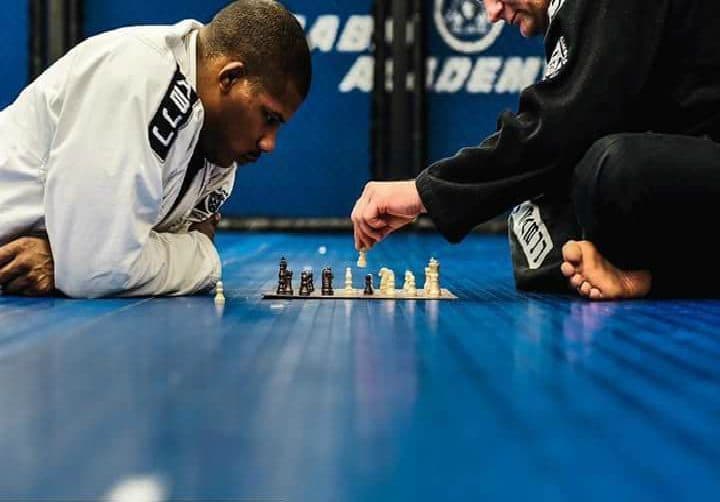
BJJ Mental and Physical Conditioning: Building the Complete Grappler
BJJ strength and conditioning is only half the job. The mental side — focus, composure, pattern recognition under pressure — is what separates grapplers who plateau from those who keep climbing.