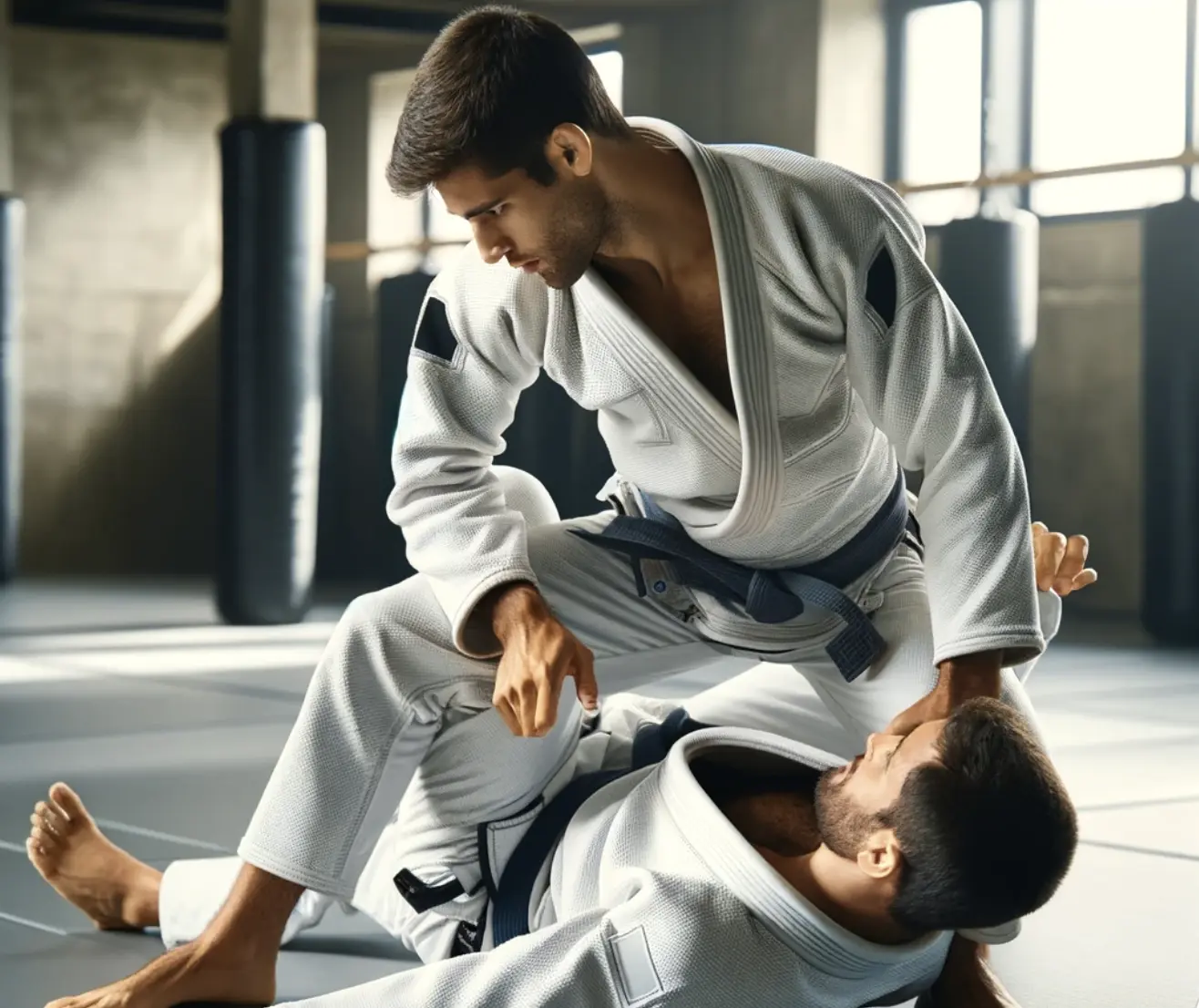
All BJJ Moves: The Complete Techniques and Positions Glossary
Complete BJJ techniques glossary: positions, guards, submissions (RNC, buggy choke, loop choke, triangle), sweeps, guard passes, takedowns, escapes and essential drills.
This is the complete glossary of Brazilian Jiu-Jitsu moves, positions, and techniques. Use it as a reference when you hear a term on the mats you do not recognise, or work through it as a structured map of the sport. Each section covers the mechanics, purpose, and common attack chains so you understand the why behind the technique, not just the name.
Categories at a glance
| Category | What it covers | Examples |
|---|---|---|
| Foundational moves | Body movements that underpin everything | Shrimping, bridging (upa) |
| Dominant positions | Top control positions you fight for | Mount, back, side control, knee-on-belly |
| Guard types | Bottom positions using legs to control | Closed, butterfly, spider, De La Riva, half guard |
| Submissions | Chokes and joint locks that end the fight | RNC, armbar, triangle, kimura, buggy choke |
| Sweeps | Reversals from bottom to top | Scissor, hip bump, butterfly, pendulum |
| Guard passes | Top-game routes around the legs | Knee slice, torreando, stack, leg drag |
| Takedowns | Standing techniques to the ground | Double leg, single leg, hip throw, ankle pick |
| Escapes | Routes out of bad positions | Upa, shrimping, elbow escape |
What is BJJ?
Brazilian Jiu-Jitsu is a grappling-based martial art, self-defence system and combat sport built around ground fighting. The core idea: a smaller, lighter person can control and submit a bigger, stronger opponent using leverage, timing and technique. Think of it as physical chess.
BJJ traces back to Japanese Jujutsu and Kodokan Judo. Around 1917, Japanese judoka Mitsuyo Maeda taught Carlos Gracie in Brazil. Carlos and his brothers (most notably Hélio Gracie) adapted the techniques to favour the ground, building the system now known globally as BJJ. Today it is the grappling foundation of MMA and the fastest-growing martial art in the world.
Foundational movements
Before any specific technique, your body needs to understand a few core movements. These are the alphabet of BJJ.
Hip escape (shrimping)
The single most important movement in the sport.
- Mechanics: From your side, plant a foot and a shoulder, lift your hips, scoot them back away from your opponent.
- Purpose: Creates space. Space is what lets you escape mount and side control, recover guard, and set up attacks.
Bridge (upa)
The other movement you cannot do without.
- Mechanics: On your back, feet flat near your butt, drive your hips up explosively. Power comes from the legs, not the arms.
- Purpose: Disrupts the top player's base, particularly from mount. The engine for most pin escapes.
Posture, base, frames, grips
- Posture: Strong spinal alignment, harder to break down. On top, posture prevents submissions. From the bottom, breaking the opponent's posture is the first move of most attacks.
- Base: Stability and connection to the ground. A wide, low base resists sweeps.
- Frames: Skeletal structure (forearms, shins) used to create and maintain distance against pressure. Bone, not muscle.
- Grips: Your control points. Gi grips include collar, sleeve, pistol, monkey. No-gi shifts to gable grips, c-grips, overhooks and underhooks.
Lingo
- Oss / Ossu: Japanese term used as a sign of respect, agreement or encouragement.
- Tap: Universal signal for submission. Tap your partner, the mat, or say "tap" to concede.
- Roll: Sparring or live training.
- Gi / Kimono: The traditional uniform.
- No-gi: Training in rashguard and shorts.
- Porrada: Portuguese for hard sparring.
- Creonte: Slang for someone who leaves their academy for a rival.
- Amarrão: Portuguese for a staller.
Dominant positions
Mount
The "king of pins."
- Description: You sit on your opponent's torso, legs straddling their body.
- Variations: Low mount (more stable), high mount (knees near armpits, better for arm attacks), technical mount (one foot posted, useful in scrambles).
- Score: 4 points in IBJJF.
- Common attacks: Armbar, americana, kimura, cross-collar choke, arm triangle, ezekiel.
Back control
The strongest position in the sport.
- Description: Behind your opponent, chest-to-back, controlling their hips and shoulders.
- Required control points: Two hooks (feet inside their thighs, ankles uncrossed to avoid foot locks) OR a body triangle (your legs locked around their waist). Plus a seatbelt grip with one arm over the shoulder and one under the armpit.
- Score: 4 points in IBJJF.
- Common attacks: Rear naked choke (the highest-percentage submission in grappling), bow and arrow choke, collar chokes, armbar.
Side control
The workhorse pin.
- Description: Perpendicular across your opponent's chest, chest-to-chest, hips low.
- Key control points: Crossface (your shoulder pressuring their jaw, turning their head away) and underhook (controlling their far armpit).
- Score: 3 points after a guard pass in IBJJF.
- Common attacks: Americana, kimura, armbar, north-south choke, paper cutter choke.
Knee-on-belly
The pressure cooker.
- Description: One knee posted on the opponent's stomach or chest, other leg out wide for base.
- Score: 2 points in IBJJF.
- Common attacks: Armbar, kimura, collar chokes, baseball bat choke.
Guard headquarters
The guard is what defines BJJ. It is the art of fighting effectively off your back, using your legs to control, defend and attack.
Closed guard
- Description: On your back, legs wrapped around the opponent's torso, ankles locked.
- Purpose: Defensive control. A platform for breaking posture, then attacking sweeps and submissions.
- Attacks: Armbar, triangle, kimura, omoplata, guillotine, cross-collar choke, scissor sweep, hip bump sweep, flower sweep.
Butterfly guard
- Description: Seated with both feet hooked inside the opponent's thighs, knees flared like wings.
- Purpose: Elevate and sweep, including against larger opponents. Strong transition point to X-guard.
- Attacks: Butterfly sweep, triangle, armbar, X-guard entries.
Spider guard
- Description: Gi-based. Both sleeves controlled, one or both feet pressing into the opponent's biceps.
- Purpose: Distance, posture-breaking, off-balancing. Includes lasso guard (leg wrapped around the arm).
- Attacks: Triangle, omoplata, various sleeve-based sweeps.
De La Riva guard
- Description: One leg hooked from the outside around the opponent's lead leg, the other foot pushing on their thigh or hip.
- Purpose: Off-balance a standing opponent, prevent passes, set up sweeps and back takes.
- Attacks: DLR sweep, berimbolo to the back, ankle locks, tomahawk sweep.
Half guard
- Description: One of the opponent's legs trapped between both of yours, top leg framing.
- Modern variations: Deep half (underneath the opponent, powerful sweeps), Z-guard / knee shield (top shin framing across hip or chest), lockdown (figure-four leg lock around the trapped leg).
- Attacks: Old school sweep, John Wayne sweep, pendulum sweep, foot grab sweep, back takes, kimuras, electric chair from lockdown.
Pulling guard
In sport BJJ, you can intentionally bring the fight to the ground by sitting or jumping down into a guard position rather than fighting for a takedown. Trade-off: you concede the top position initially and need an immediate sweep or submission plan. Common pulling positions are closed guard, butterfly guard, De La Riva and spider.
Submissions
The end goal of most BJJ exchanges. Submissions split into chokes (attacking the neck) and joint locks (attacking the elbow, shoulder, knee or ankle).
Chokes: blood vs. air
- Blood chokes restrict blood flow through the carotid arteries on the sides of the neck. Fast, efficient and the standard. Examples: RNC, triangle.
- Air chokes restrict the trachea. Slower, more painful, less efficient. Examples: some guillotines depending on the angle.
Rear naked choke (RNC / Mata Leão)
The highest-percentage submission in all of grappling, and the most reliable self-defence finish from the back.
- Setup: From back control with hooks or a body triangle, your choking arm wraps around the opponent's neck with the crook of your elbow under their chin. Your hand grips your own opposite bicep. Your free hand goes behind their head (or onto your own shoulder) to lock the structure in.
- Finish: Squeeze your elbows together, driving your bicep and forearm into the sides of their neck. Done correctly, the choke compresses both carotid arteries and ends the fight in 5 to 10 seconds.
- Common mistakes: Choking arm too shallow (forearm across the windpipe rather than the carotids), free hand not securing the structure, hooks slipping during the squeeze.
The RNC works in BJJ, MMA, and on the street. It is the single most important submission to drill if you train BJJ for self-defence.
Triangle choke (sankaku jime)
- Setup: Trap one of your opponent's arms and their head inside your legs. One leg goes across the back of their neck, ankle of the other leg locked behind the knee of the first.
- Finish: Squeeze your thighs together and pull down on their head. Pressure comes from your shin compressing one carotid and their own shoulder compressing the other.
- From: Closed guard, spider, butterfly, mount, even side control transitions.
Guillotine
- Setup: Your arm wraps around the front of the opponent's neck, forearm under their chin. Hands lock, apply upward pressure.
- Variations: Arm-in (more control, less choking power), high-elbow / Marcelotine (tighter, harder to defend), ten-finger.
- From: Sprawl on a takedown attempt, closed or butterfly guard when posture drops, sometimes mount.
Cross-collar choke (gi)
- Setup: Deep grip inside one collar, the other hand reaches across to the opposite collar.
- Finish: Pull elbows in and rotate wrists like turning motorcycle throttles.
- From: Closed guard, mount.
Bow and arrow choke (gi)
- Setup: From back control, deep cross-collar grip with one hand, the other grabs the pants on the same side as the choking arm.
- Finish: Fall to the side, leg over the shoulder for leverage, pull on the collar and pants simultaneously.
Buggy choke
A modern attack from the bottom of side control. Popularised by the Ruotolo brothers.
- Setup: Trapped in bottom side control, turn onto your side facing your opponent rather than lying flat. Reach your arm up between your legs, biceps under your own knee. Trap your opponent's head and arm under your armpit area.
- Finish: Loop your arms beneath your legs so your opponent's head and arm are wedged beside your rib cage. Form a triangle with your legs, point your heel toward the floor, lock your arms with a gable grip and squeeze.
- Key details from the Ruotolos: Do not lie flat (turn to face the opponent), keep the choking arm "uppercut" trapped under your leg, point your locking heel down to cinch the pressure.
- Why it matters: Even as a threat, the buggy choke creates opportunities to escape side control. A flexible grappler can chain it from bottom side into back takes and other attacks.
Loop choke (gi)
A surprise gi choke from open guard or the knees.
- Setup: From an open guard position on your knees, establish a loose cross-collar grip. The grip needs slack to allow your hand to move around the neck.
- Execution: Push your opponent slightly so they push back. As they do, pull them in, cup their head, and loop your grip all the way around their neck. Flex your wrist as your hand slides through.
- Finish: Pressure goes on the carotids, not the trachea. Wrist flexion is what cinches the choke.
- From full guard: Same principle. Pull them in, establish the grip, create an angle, apply.
- Common mistake: Choking the windpipe instead of the carotids. Less effective and more dangerous to your partner.
Joint locks
Armbar (juji gatame)
- Setup: Isolate one arm between your legs, elbow against your hips.
- Finish: Control the wrist, extend your hips upward to hyperextend the elbow.
- From: Closed guard, mount, side control, knee-on-belly, back control, often chained from triangle or omoplata.
Americana (keylock / ude garami)
- Setup: Isolate the arm bent at 90 degrees, palm up. Figure-four grip on their wrist.
- Finish: Paint the wrist toward their feet, lift the elbow slightly.
- From: Side control, mount.
Kimura
- Setup: Isolate the bent arm. Figure-four grip with your other hand passing over the upper arm and under the forearm.
- Finish: Internal rotation of the shoulder, pull the wrist toward their head.
- From: Closed guard, half guard, side control, mount, north-south.
Omoplata
- Setup: From guard, swing one leg over the back and under the armpit, trapping the shoulder between your thigh and torso.
- Finish: Rotate perpendicular, lift hips forward to pressure the shoulder.
- From: Closed guard, spider, rubber guard.
Leg locks
A complex and potentially dangerous category, often restricted by belt level in competition.
- Straight ankle lock (botina): Wrap the arm around the lower shin, forearm bone against the Achilles, hyperextend the ankle by arching back.
- Kneebar: Isolate the leg across your hips, bridge into the back of the knee.
- Heel hook: From advanced leg entanglement positions (ashi garami variations like the saddle or honey hole), grip the heel and apply twisting force. Attacks the knee ligaments. Restricted at lower belts.
Submission chaining
Skilled opponents defend. Single submission attempts rarely finish elite grapplers. Chains are the answer: an armbar threat from closed guard forces them to defend, which opens the triangle, which threatens the omoplata. A hip bump sweep flows into a guillotine or kimura if they react incorrectly. Build attacks in twos and threes, not in isolation.
Sweeps
A sweep reverses position from bottom (usually guard) to top. 2 points in IBJJF. Often more achievable for beginners than full submissions.
From closed guard
- Scissor sweep: Collar and opposite-sleeve grips, foot on the hip, opposite knee across the belly, scissor your legs and lift your hips.
- Hip bump sweep: Open guard, sit up aggressively, post a hand for base, drive your hip into theirs, pivot and roll them.
- Pendulum / flower sweep: Grips on arm and leg on the same side, pendulum your legs to elevate and roll.
- Lumberjack sweep: Used when they stand in your closed guard. Control one ankle, chop their other knee, pull them forward.
From other guards
- Butterfly sweep: Hooks inside their thighs, underhook on one side, elevate and tilt them off balance.
- Old school sweep (half guard): Underhook, bump their weight forward, use the trapped leg and hip to roll or come out the back door.
- Deep half guard sweep: Get underneath their centre of gravity, lift them off their base.
- De La Riva sweeps: Hook around the leg, off-balance with grips, sweep or transition to back via the berimbolo.
Sweep mechanics in one line
Disrupt the opponent's base, control posture and limbs, then use leverage from your legs and hips to elevate and overturn them. Most failed sweeps fail because the base was never broken first.
Guard passing
The job of the top player: neutralise the legs and get past them.
Two general styles
- Pressure passing: Stay close, apply heavy weight, pin the hips, grind through the defence. Stack, over-under.
- Movement passing: Speed, footwork, angles, beat the legs before they can settle. Torreando, leg drag.
Most modern passers blend both.
Common passes
- Knee slice (knee cut): Drive one knee diagonally across the opponent's thigh, flatten their hips, slide into side control.
- Torreando (bullfighter): Standing pass. Grip both pant legs near the knees, push their legs to one side, circle past with footwork.
- Stack pass: Grips on pants or belt, drive your shoulder into their thighs, lift their hips, stack them onto their shoulders, walk around.
- Double under pass: Both arms under their legs, hands locked at their back, lift and stack, walk around.
- Over-under pass: One arm over a leg, one under the other, shoulder pressure on the stomach, walk to the under side.
- Leg drag pass: Control one ankle, drag it across their body, step around to block the hip. The foundational modern pass.
What wins the pass
- Inside position: control the space between their elbows and knees.
- Hip control: pin the hips flat, prevent them from shrimping or framing.
- Chained attempts: passes work in combinations, not in isolation.
Takedowns
Every match starts standing. A takedown game lets you dictate where the fight happens.
Wrestling-based
- Double leg: Level change, deep penetration step, both arms behind their thighs, drive forward or turn the corner.
- Single leg: Capture one leg high (high crotch) or low (low single), lift, finish by running the pipe or tripping the support leg.
- Ankle pick: Pull them forward with an upper-body grip to force a step, drop and cup the stepping ankle.
- Knee tap: From the clinch with an underhook, step in, push their near knee inward.
Judo-based
- Hip throw (O Goshi): Get your hips lower than theirs, load them on your back, rotate and throw.
- Foot sweeps (De Ashi Barai etc): Sole of the foot sweeps their weight-bearing ankle in the direction it was moving. Pure timing.
- Tomoe nage (stomach throw): Sacrifice throw. Sit down close, ball of the foot on their hip, fall back and lift them over your head.
- Sumi gaeshi (corner reversal): Counter-throw. Drop weight, hook the inner thigh, roll back diagonally.
Timing over power
Effective takedowns lean on timing, setup and off-balancing (kuzushi) more than explosive power. The grip fight, fakes, level changes and angles are usually what decide who scores.
Escapes
You will end up in bad positions. Escapes are the lifeline.
Mount escapes
- Upa (bridge and roll): Trap one arm and the same-side foot, bridge explosively, roll over the trapped side. The high-percentage classic.
- Elbow escape (shrimping escape): Bridge to create space, turn to your side, shrimp away, slide a knee back inside to recover half guard or full guard.
Side control escapes
- Hip escape (shrimping): Frames on the hip and the neck, shrimp hips out, knees back inside.
- Elbow escape: Forearm wedge under the chin, push their hip, turn to the side, slide a knee into the space.
Back control escapes
The hardest position to escape. Principles:
- Defend the choke first. Always.
- Fight the seatbelt grip.
- Clear the hooks (step over or push off).
- Get your shoulders to the mat, then turn into them.
Knee-on-belly escape
Push directly on their posting knee with a near-side frame, shrimp away hard, knees back inside.
Turtle position
Tucked on hands and knees. Vulnerable to back takes and chokes. Escapes:
- Roll to guard: Time a shoulder roll as they try to set hooks.
- Technical stand-up: Create space, stand up safely.
Escape timing
The best window is during the opponent's transitions, not when they are fully settled. Their weight shifts, their base lifts briefly, their grip resets. That is when openings appear.
Essential drills
Drilling builds the muscle memory that makes techniques work in live rolling. The drills every BJJ student should be doing weekly:
Solo drills
- Shrimping: Length of the mat, focus on hip mobility and the foot-shoulder plant.
- Bridging: Off the heels and shoulders, full hip extension.
- Technical stand-up: Safely back to your feet from a seated base.
- Granby rolls: Inversions for guard recovery.
Guard passing drills
- Torreando drill: Side-to-side movement, controlling pant grips.
- Knee slice drill: Slow, repeated cuts from half guard into side control.
- Leg drag drill: Drag, step around, settle into side control or back control.
Guard retention drills
- Frame and hip escape: From flat on your back, frame and recover guard against a passing partner.
- Inversion drill: Build the flexibility and coordination for inversions.
Submission drills
- Armbar drills: From closed guard, mount, side control. Focus on the hip-fulcrum mechanics.
- Triangle drills: Setup from closed guard, leg position, finishing angle.
- RNC drills: From back control with hooks, build the choke structure repeatedly.
Takedown drills
- Double leg shots: Level change, penetration, finish.
- Single leg shots: Both head-inside and head-outside finishes.
- Foot sweep timing drills: Walking pattern with a partner, sweep on the timing.
Transition drills
- Mount to back take: When they turn to escape, take the back.
- Side control to mount to back: Flow through the dominant-position ladder.
The minimum effective dose is one drilling block per training session. Most students under-drill and over-roll, which is why their game stalls at blue belt. Drill the fundamentals every week.
Frequently asked questions
What is the highest-percentage submission in BJJ? The rear naked choke. It is the most reliable finishing technique in grappling and MMA history.
What is the most important position in BJJ? Back control. Maximum control, minimum risk, and direct access to the highest-percentage submission (the RNC).
What is the buggy choke? A modern submission applied from the bottom of side control, popularised by the Ruotolo brothers. You trap the opponent's head and arm under your armpit, form a triangle with your legs, and squeeze with a gable grip.
What is the loop choke? A gi choke applied from open guard. Loose cross-collar grip, loop your hand around the neck as your opponent pushes forward, finish with wrist flexion across the carotids.
How long does it take to get good at BJJ? Most people start to feel competent in their first year. Blue belt takes 1.5 to 3 years. Black belt averages 10 to 12 years.
What is the most important movement in BJJ? Hip escape (shrimping). It underpins almost every escape and guard recovery.
What is the difference between gi and no-gi BJJ? Gi uses the uniform's collars, sleeves and pants as grips, which slows the pace and allows friction-based control. No-gi uses body locks, underhooks, overhooks and grips on limbs, which speeds up exchanges.
Can a smaller person beat a bigger person in BJJ? Yes, especially against an untrained larger person. Against a trained larger opponent, size still matters but technique closes most of the gap.
What is a sweep in BJJ? A reversal from bottom (usually guard) to top, scoring 2 points in IBJJF.
What does "tap" mean? The signal for submission. Tap your opponent, the mat, or say "tap" to concede before the technique injures you.
The bottom line
BJJ is deep and evolves constantly. New techniques surface every year, names vary between academies, and the meta shifts as elite competitors push new positions. This glossary covers the foundations: the moves you will see every week on the mats, in the same vocabulary your coach uses.
The fastest way to learn is consistent training, deliberate drilling, and a willingness to be the new person in the room. Tap early, ask questions, train safely.
For more on the people and gyms shaping the sport, see our pages on Gordon Ryan, the New Wave Jiu-Jitsu team, and the John Danaher coaching system. For gear, start with our best BJJ gis and BJJ equipment guide.
Last updated May 16, 2026
Filed under Techniques
// Keep going
More from Techniques
BJJ Mental and Physical Conditioning: Building the Complete Grappler
BJJ strength and conditioning is only half the job. The mental side — focus, composure, pattern recognition under pressure — is what separates grapplers who plateau from those who keep climbing.
Rolling with Men in BJJ: A Practical Guide for Women
Practical guide for women rolling with male training partners in BJJ: how to approach it, what to expect, when to speak up, and how to use the size difference to your advantage.
20 BJJ Rolling Tips for Gi and No-Gi (Beginner to Intermediate)
20 practical BJJ rolling tips for gi and no-gi: grip control, scrambles, defending submissions, winning sweeps and the small habits that separate upper belts.